The Florida Board of Education’s newly-passed Black history standards are drawing the ire and reproach of numerous education advocates and civil rights organizations.
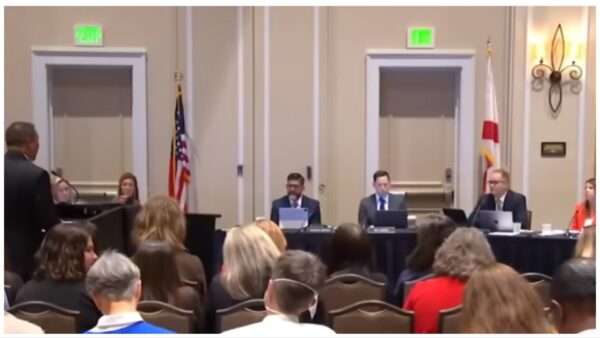
On Wednesday, the board approved a sweeping new set of criteria for teaching Black history in Florida’s K-12 schools as Gov. Ron DeSantis and his constituents continue a statewide campaign to drastically shift social studies education and related curricula.
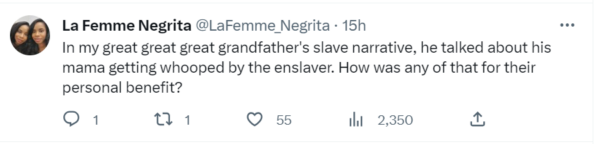
The standards impose language that dampens the uglier and more inhumane parts of slavery, appearing to make the historical occurrence more palatable for instruction. For example, the standards include statements like “slaves developed skills which, in some instances, could be applied for their personal benefit.”
That note appears in a section pointing middle-school Black history courses to “examine the various duties and trades performed by slaves (e.g., agricultural work, painting, carpentry, tailoring, domestic service, blacksmithing, transportation).”
The passing of these new standards comes after the board banned instituting an AP African American Studies in high schools earlier this year, claiming the course “significantly lacks educational value” and challenged Florida law.
The Florida Education Association, the state’s teachers’ union, called the standards a “disservice to Florida students and a big step backward.”
“How can our students ever be equipped for the future if they don’t have a full, honest picture of where we’ve come from,” asked Andrew Spar, president of the Florida Education Association. “Gov. DeSantis is pursuing a political agenda guaranteed to set good people against one another, and in the process, he’s cheating our kids. They deserve the full truth of American history, the good and the bad.”
While the state’s education commissioner Manny Diaz Jr. says the standards are wide-ranging and comprehensive, advocacy groups aren’t convinced, believing that the lack of instruction on racial discrimination in early grades will impact how younger students view the nation’s history.
“This is robust curriculum,” Diaz said of the criteria that his staff created. “I think this is something that is going to set the norm for standards in other states. If anyone takes the time to actually look at the standards, you can see everything is covered.”
Education board member Kelly Garcia, a Ron DeSantis appointee, defended the standards and insisted that “the darkest parts of our history are addressed.”
Several lawmakers who attended the board meeting where the standards were passed denounced the new criteria.
“It’s an attempt to whitewash our history,” state Sen. Geraldine Thompson said after the meeting.
“Any kind of standards that indicate that slavery benefited Black people is such an insult,” state Rep. Rita Harris remarked.
“The notion that enslaved people benefitted from being enslaved is inaccurate and a scary standard for us to establish in our education system,” state Rep. Anna Eskamani stated.
Nearly a dozen organizations, including the NAACP, also wrote a letter to the Florida Board of Education president asserting that the standards are far from the par to teach the full extent of Black history.
“We owe the next generation of scholars the opportunity to know the full unvarnished history of this state and country and all who contributed to it ― good and bad,” the letter stated.
The NAACP also released a statement on the new standards which, in part, read: “Make no mistake: The Florida State Board of Education’s updated standards on how Black history will be taught in schools are a joke and an affront to the Black community.”
As the news circulated on social media, several users also voiced their bewilderment and displeasure with the standards.