Labor arbitrators have ruled against the reinstatement of Rose Valentino, a former Cincinnati police officer who was fired for using a racial slur.
Valentino was caught on her own body camera making derogatory comments while stuck in traffic near Western Hills University High School and District 3 police headquarters on April 5, 2022.
“F—ing n—–s, I f—ing hate them,” Valentino was captured on the footage saying.
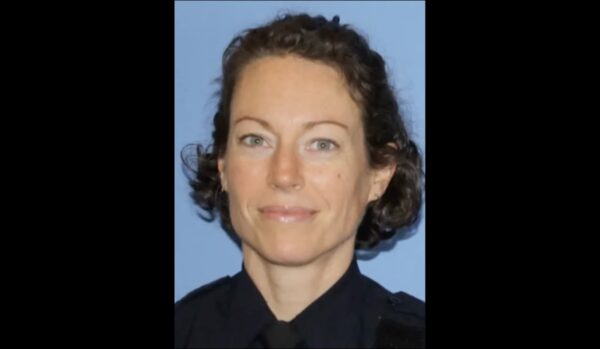
Cincinnati police chief Teresa Theetge reviewed the video and fired Valentino after concluding the cop’s ability to let the racial slur roll off her tongue so easily made her unfit to continue to serve the community.
“I want to be clear; this type of hateful speech will not be tolerated by anyone who works for the Cincinnati Police Department, sworn or civilian,” Theetge said in a news release announcing the officer’s termination in August 2022.
Valentino argued that she was being unfairly treated compared to other officers who had used slurs while on duty. However, the labor arbitration decision denied Valentino’s request for her job back, affirmed the consequences of her racially offensive remarks and highlighted the importance of maintaining public trust in law enforcement.
According to reports, Valentino was alone in her police cruiser with the windows up when she came across a vehicle blocking an exit. She activated the lights and sirens on her cruiser, simultaneously triggering her body-worn camera. When she was trying to make the car move, a teenager in the vehicle flicked her off.
The arbitrators contended that Valentino’s use of the racial slur went beyond a casual remark and instead constituted a “vituperative denunciation of an entire race.”
They highlighted that her comments demonstrated a strong sense of hatred and compromised her ability to fulfill her duty of protecting the community.
Dan Hils, the president of Cincinnati’s police union, disagrees with the decision.
Hils criticized the involvement of Joe Mallory, the NAACP president, as a witness in the arbitration case, suggesting that his presence may have influenced the arbitrators’ decision.
Mallory argued, however, that Valentino’s remarks were indefensible, making her a liability in interactions with Black citizens.
The arbitrators also addressed Valentino’s stress and mental health issues, noting that the police department had provided various programs and services to address these concerns. However, the decision showed that Valentino did use the resources until after the incident occurred.
While the arbitration decision can potentially be challenged in court, Hils confirmed that the ruling is currently binding and no legal challenge has been initiated. He believes it was influenced by public opinion, to which the arbitrators contend “public perceptions and public interest are relevant” and can be a factor in discipline.
“The arbitrators are admitting, in a sense, that public reaction and/or potential mob rule will affect their decisions here and in the future,” he said. “This acknowledgment is something police officers should consider when deciding which community to serve in their profession.”
Mallory said if Valentino had been reinstated, it would have undermined the city’s integrity and cast a shadow over the police department’s reputation.
“If she had gotten her job back, it would have been a slap in the face to the city of Cincinnati, and it would have put a dark cloud over the integrity of the police department,” Mallory said.


