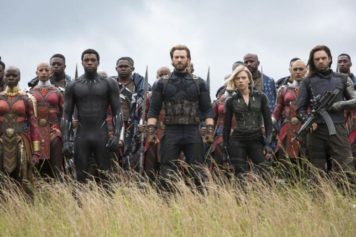
A plot point in “Black Panther: Wakanda Forever” has sparked outrage and criticism for its depiction of rogue French militia.
In the film, there is a scene that depicts a group of bound French troops as they are escorted by Wakanda’s Dora Milaje warriors to Queen Ramonda as she meets with world leaders inside the United Nations in Geneva, Switzerland. The men were being held accountable for an attempt to steal the futuristic empire’s prized natural resource, vibranium, from an outpost in the West African country of Mali.
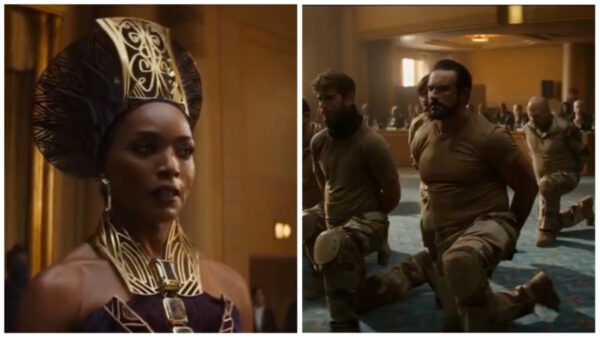
Sébastien Lecornu, France’s minister of the Armed Forces, slammed the fictional plot. In a Feb. 12 tweet, he wrote, “I strongly condemn this misleading representation of our Armed Forces. I think and pay tribute to the 58 French soldiers who died defending Mali at its request against Islamist terrorist groups.” Lecornu’s message came as a response to journalist Jean Bexon, pointing out that the troops in the Marvel flick were dressed as Operation Barkhane soldiers.
Mali has long ties to France, dating back to the late 1800s, when the African country was colonized. In 1960, Mali and Senegal unionized, forming the Mali Federation and gaining independence from France. Fifty-three years later, in 2013, Mali had become overrun by militant Islamist groups. In response to the insurgent occupation, the French Army formed Operation Serval, which later became Operation Barkhane, to aid local forces in the Sahel region in efforts to counter the Islamist groups.
“At its high point, Operation Barkhane saw some 5,500 French soldiers deployed in Mali, Niger, Chad, Burkina Faso and Mauritania,” reported the BBC last November when President Emmanuel Macron formally ended the mission.
While the French politician may have taken personal offense to a portion of the film’s plot, the reactions to his criticism varied online. “The funny thing is that French soldiers have been doing this kind of s—t in Africa for years” wrote one person. Other comments included:
“It’s only a movie, nobody yelled to say that the office of legends is pro-French propaganda, it’s fiction…”
“Truth transcends all dimensions. The French are the worst enemies of the African continent. France must leave Africa.”
“French people who want to plunder the resources of Africa, no, that can only be fiction! It seems that Boloré will be the villain in the next Spider-Man.”
“The message of the film on colonization seems to have gone completely over your head…”