A Black man who was sentenced to death by an all-white jury in Amarillo, Texas, was executed on Feb. 8.
John Balentine was pronounced dead at 6:36 p.m. from a lethal injection administered by the state penitentiary in Huntsville.
The 54-year-old was convicted of killing three teenage boys in Amarillo back in 1998. The then-28-year-old confessed to the murders, having shot the three boys in the head as they slept inside a home Balentine once shared with his ex-girlfriend.
Balentine claimed that one of the three teens — who were all white — had threatened to kill him because Balentine was in an interracial relationship with his sister, but an all-white jury in Texas sentenced him to death.
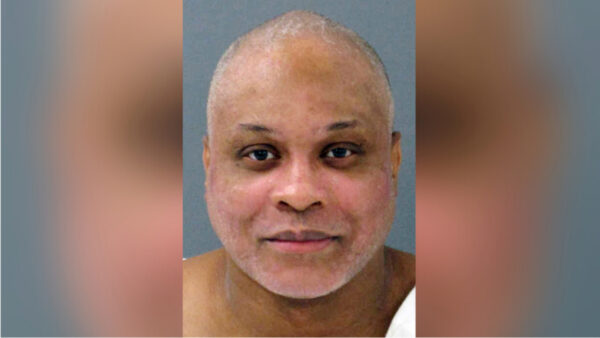
Balentine admitted to shooting Edward Mark Caylor, 17, 15-year-old Kai Brooke Geyer and 15-year-old Steven Watson after he saw a note from one of the victims that said, “I am gowing [sic] to kill the n—r.” The brother of one of the victims also testified that sometime before the killings, he pinned a note about the Ku Klux Klan to Balentine’s front door.
Balentine was the only Black person in the room during his trial in 1999, and his appeals focused on racial bias during the trial. His lawyers claimed that they have new evidence about the jury foreperson, Dory England, and his racist history.
England reportedly said he did not like Black people and often used the N-word. The foreperson also allegedly said they believed that interracial relationships were wrong. One of Balentine’s own trial lawyers wrote a note to another attorney which said, “Can you spell justifiable lynching?”
England also allegedly bullied the other jurors and said in an affidavit that he would have to “hunt him down” if Balentine ever received parole.
“I knew if the others opted for life there was a chance he could get paroled, I would need to hunt him down,” England wrote. “If I ever saw Balentine on the street, I’d shoot him myself.”
England also failed to disclose information that would have disqualified him from the jury, including violent incidents that he was a victim of and witness to, such as being molested and shot. He also refused to consider a life sentence for Balentine.
“I am pretty stubborn and pretty aggressive. I don’t play well with others,” said England in his sworn declaration. “I made it clear that we were chosen to take care of this problem, and that the death penalty was the only answer. If we didn’t, I told them Balentine would do it again.”
He also reportedly ripped up a note from another juror to the judge saying she did not want to impose a death sentence. Balentine’s lawyers also argued that Texas was attempting to use unsafe and expired lethal injection drugs amidst the nationwide shortage, but the case was thrown out.
Balentine’s lawyer Shawn Nolan released a statement accusing the jury foreperson of being a racist. “We now know that the jury foreperson held racist views, lied about his background, and pressured other jurors to vote for death,” wrote Nolan. “This kind of juror misconduct would be egregious in any case, but it is particularly damaging in a death penalty case already rife with racial issues.”
Nolan also claimed that prosecutors blocked Black jurors during jury selection, thereby interfering with Balentine’s right to an impartial jury.
The U.S. Supreme Court declined an appeal on Feb. 8 from his attorneys to halt the execution and investigate the mounting evidence of racial bias Balentine endured during his trial. Republican Gov. Greg Abbott and the Texas Court of Criminal Appeals denied a stay of execution request for Balentine.
In Balentine’s last statement, he apologized for his crime and thanked those who had supported him. “I want to thank y’all. I love y’all for supporting me. I want to apologize for the wrong I did to y’all. Forgive me, I’m ready.” After he was pronounced dead, the victims’ witnesses to the execution gave each other high-fives.


