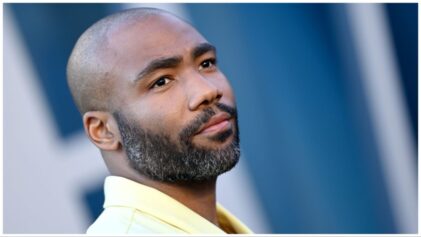
‘Atlanta’ star and creator Donald Glover wants his critics to stop lurking in the shadows of social media when speaking ill of his hit show.
Ahead of the show’s third and final season premiere — which comes after a four-year hiatus — Glover sent out a warning shot telling critics to “please @ me this year if u talk s—t on me.”
Now with a few of the season’s episodes thrown into the gauntlet of public opinion, Glover is yet again reminding critics that instead of trying to downplay the show, or slam storylines on the low, they can instead direct their opinions directly to him. Taking to social media on April 1, the rapper-actor wrote, “I see y’all talkin on me and I said it already: @ me. if its a true critique, I need dat receipt. be brave wicha blue check. looking forward to y’all being mad @ me next week.”
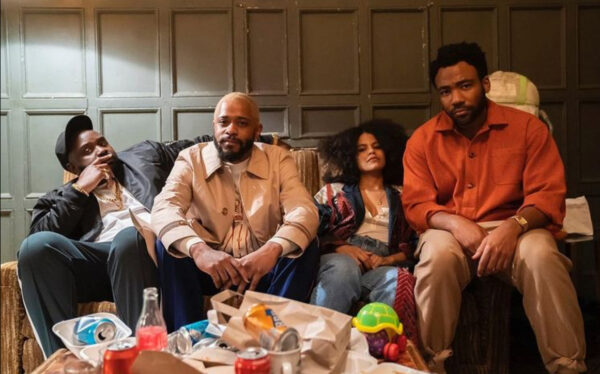
The FX comedy-drama debuted in 2016 and centers on up-and-coming Atlanta rapper Alfred “Paper Boi” Miles, played by Brian Tyree Henry, his cousin-manager Earnest “Earn” Marks, played by Glover, their eclectic and philosophical friend Darius Epps, who is brought to life by actor LaKeith Stanfield, and the show’s lone female star, Zazie Beetz, who plays Vanessa Keefer, Earn’s ex-girlfriend and mother of his child. The show was an immediate hit among viewers who felt the show was true to the ebb and flow of life in the city known as being “too busy to hate” and added comedic relief to some relatable issues.
But while the first two seasons take place in the Peach State’s capital, season 3 sees the four-member crew set their sights abroad while weaseling their way through Amsterdam, where folks see no harm in wearing blackface.
Thus far the season has tackled the real-life story, with a spin of dark and twisted humor, of a white foster couple’s attempt at killing themselves and their adopted Black children. Even the argument of the construct of whiteness being the key to access and supremacy in America has reared its head into the season, daring viewers to escape the inescapable: racism. For some criticizing the season, it is those very themes that argued as being overbearing and thieves of the show’s less dark humor.
“This last ep was a little too ‘in your face’ about the racism lessons it tried to teach. More subtle ways like earlier seasons would be cool. Season 1 was better in the description ain’t gunna help you tho,” commented.
Others however chose to praise the show and steer clear of any chance they may be called out by Glover. ”I got a blue check. But I don’t want the smoke…Just want to commend you on ALL you have contributed to the culture.”
Glover, while biased, naturally, has said that “Atlanta” is some of the best content on television. “I talk my s—t on the internet,” he told Variety when addressing statements he has made about the show in past social media posts. “I said ‘Sopranos’ and sh—t. I’m not backing down from that s—t. I’m holding my nuts out on that s—t. I just want [audiences] to know this s—t is good. It’s high quality s—t.”