The Booming Cannabis Industry Is Still Leaving Black Americans Behind, and That’s a Problem

More than two decades after states began legalizing cannabis, researchers and advocates say they’re noticing that Black people have been largely shut out from making money in the burgeoning marijuana industry.

The legalized marijuana market is expected to reach $43 billion by 2025, according to cannabis market research firm New Frontier Data. As part of that growth, New Frontier Data researchers estimate 5.4 million Americans will be registered marijuana patients, a 2.4 percent increase from 2021.

California Street Cannabis Company owner Drakari Donaldson (Photo from Facebook)

Part of the reason Blacks haven’t done so well in the growing cannabis industry is because it costs too much money to open a dispensary, advocates told Finurah. Another reason is because states have passed faulty legislation that either caps or blurs the line on who can get a license to sell, the advocates said.

“The two reasons that Black entrepreneurs are not just blowing up and starting cannabis businesses left and right is historical disadvantages and bureaucrat challenges on the local and state level,” said Laura Herrera, an independent cannabis consultant who also does research for the University of California Berkeley.

California was first to legalize medical marijuana in 1996. Colorado legalized it for recreational use — a national first — in 2012. Since then, 37 states have legalized medical marijuana and 18 have approved it for recreational use.
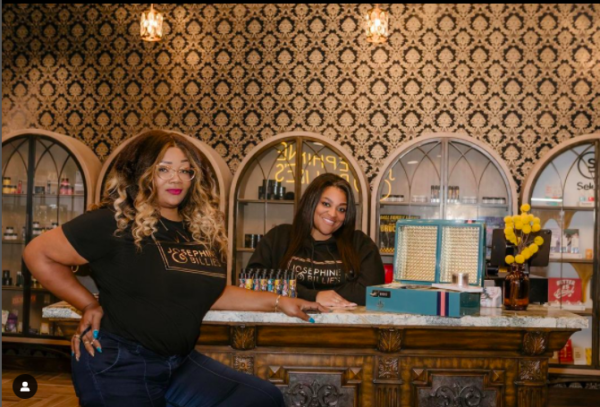
Whitney Beatty and Ebony Andersen of Josephine & Billie’s (Photo from Instagram)

As more states approved cannabis, industry insiders said they expected more Blacks to be released from jail for selling marijuana and more Black people pursuing careers in the field. That hasn’t been the case, experts said.

Industry observers say there is a growing disparity between Black and white Americans entering the business. About 80 percent of cannabis business owners and founders were white, a 2017 Marijuana Business Daily survey found. About 4 percent of those owners were Black.

Read the full story here.


More news from our partners:

‘My Mom Looks Like You’: Thandiwe Newton Faces Backlash After She Apologizes to Darker-Skinned Actresses for Not Representing Them

“Being Asked To Take A 60% Pay Cut Is Now How They Fire Minority Coaches”| 49ers Reportedly Play Dirty Pool With Former Assistant Coach Jon Embree

‘You’re Taking the American Dream from Us’: Detroit Overtaxes Property Owners By $600 Million; City Will Not Pay For Mistake


Still independent.

We hope this story was worth your time. For over 14 years, Atlanta Black Star has stayed Black-owned and independently run. We didn't get here by waiting on ad budgets that were never built to prioritize us. Our readers did that.

Corporate support for Black media has always been thin. Outlets like ours get roughly 1% of the $170 billion spent on U.S. advertising each year, and that margin is shrinking further as advertisers walk back the DEI-linked commitments they made in 2020. That's the backdrop. It's not why we're asking.

The wider picture isn't any steadier. Newspaper ad revenue has fallen more than 80% since 2005, and local newsrooms are closing at a rate of roughly two a week nationwide. When outlets go under, it's rarely the ones built to center a Black perspective from the ground up that get to stick around.

We know a request for support isn't why you came here. But without readers choosing to fund this work directly, the depth of reporting we can do at home and abroad shrinks along with everyone else's. If you're not in a position to give, that doesn't change how much we value you as a reader.

If you are able to, a recurring contribution does more for us than a single one-time gift, because it lets us plan the next investigation instead of just the next invoice. It takes about 30 seconds, no long form, no account. Thank you for continuing to support independent journalism and freedom of the press.

Back to top