Actor TJ Atoms raised the bar with his role as the late Ol’ Dirty Bastard in Hulu’s “Wu-Tang: An American Saga.” Executive produced by Wu-Tang Clan’s RZA and Method Man, the biographical series follows the rise of the iconic hip-hop group in New York City in the early 1990s.
ODB, born Russell Tyrone Jones, was known for his authentic stage presence and distinctive half-rapped, half-sung style. Unfortunately, the legendary rapper died in a New York recording studio on Nov. 13, 2004, two days before his 36th birthday.
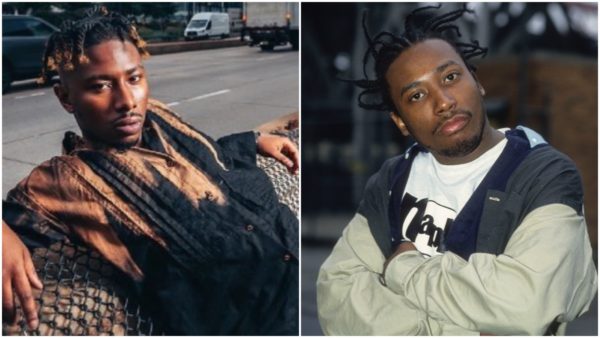
We spoke with TJ Atoms on Friday, Oct. 22, about ODB’s musical influence, growing up in North Philly, and his introduction to music.
Atoms said he immediately felt the “pressure” when filming “Wu-Tang: An American Saga,” which premiered on Sept. 14, 2019. Although he landed the role as ODB, he says producers originally had him audition to play another founding Wu-Tang member: Raekwon. Ultimately, that role was given to actor Shameik Moore.
“I didn’t think I could play ODB,” he noted. “I [didn’t] think nobody in the world could play ODB at the time. I was still in the trenches when they called me [back] and I was just like, ‘Damn, I’m bout to play ODB, that’s scary.'”
In “Wu-Tang: An American Saga,” Atoms distinctively copied ODB’s signature style and aesthetic, rocking gold grills and braids that stick up. He called ODB “the Abstract Uncle of the Culture” and acknowledged his influence over today’s artists.
“His music, his whole presence is what the kids are doing right now, with the gold teeth, with the hair, even with the abstract rapping,” the 26-year-old explained. “I feel like he created the generation we are in now, and I don’t think he gets the credit for it.”
“If you really look at the kids today, that’s ODB’s babies. He was the first mumble rapper. I can’t understand anything ODB be saying, but that s–t [was] hot. And that’s what it is today. I think ODB deserves that credit.”
Songs like “Wu-Tang Clan Ain’t Nuthing to F’ Wit” influenced Atoms to pursue music and form the teenage rap group known as Bakery Boys. With songs like “Represent,” the short-lived group built a following around their shared love for skateboarding and the underground art scene.
“Skateboarding really helped me get out the hood. It took me out of my environment,” said Atoms. “It introduced me to new people and new things, and through that, I connected with a couple of people, and that took me to acting. That’s what helped me, and that’s how you guys know me now.”
TJ Atoms predicts others will soon follow his blueprint in Hollywood as well as music. On Wednesday, Oct. 27, the rapper performed his new single “Potato Chip” in front of a hyped crowd during an intimate showcase at Soho House New York.
“We like diversity in hip-hop, and that’s what TJ Atoms come from,” he explained. “I’m ’bout to give y’all some cool new s–t, some good feelings. Quote this Atlanta, they gon’ … try to copy my whole swag. But it’s necessary because … the music is trash, and I just feel like I’m the new anchor for the culture to follow.”
Suggesting he may only release one album, TJ Atoms joked, “I might only give y’all one album and get out of here like Lauryn Hill.”
TJ Atoms has also appeared in other television series and films such as “Blue Bloods,” “Power,” “Godfather of Harlem,” “Orange Is the New Black,” and Lena Waithe’s Netflix comedy-drama “The 40-Year-Old Version.”