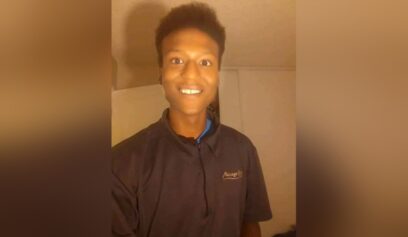
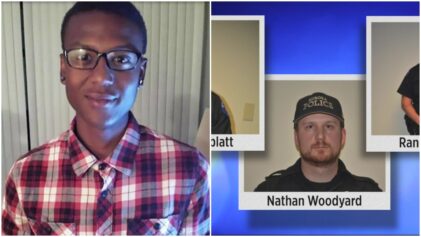
The family of Elijah McClain, a 23-year-old who died after being placed in a chokehold and later injected with a sedative by police officers, announced this week that they had reached a tentative settlement agreement with the city of Aurora, Colorado.
Mari Newman, one of the lawyers for the family, told CNN in a statement that McClain’s father, LaWayne Mosley, is “hopeful that this settlement with Aurora, and the criminal charges against the officers and medics who killed Elijah, will allow his family and the community to begin to heal.”
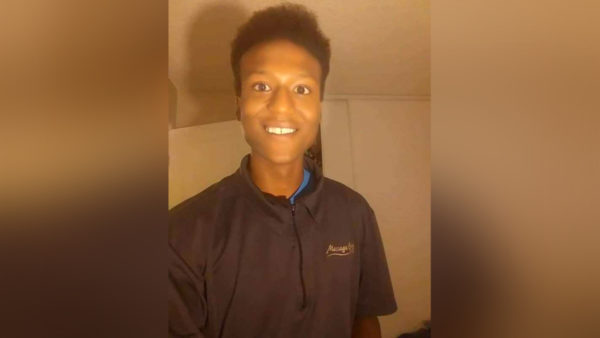
Iris Halpern, who represents Sheneen McClain, Elijah McClain’s mother, said during a telephone interview with the New York Times on Tuesday, Oct. 19, that she “feels that at least some justice has been done,” but noted the criminal aspect of the case mattered more to her.
“Elijah McClain is not with us, and her family is going to have to live with that forever,” she added.
Halpern also noted that the settlement amount would not be made public until the funds are allocated between “Ms. McClain, the parent who raised Elijah McClain by herself, and Lawayne Mosley, the absent biological father” — a decision that will reportedly be made by the courts.
The latest update comes after more than two years after McClain’s death. As previously reported, the young man, a known animal shelter volunteer and violin player, was walking home from a local convenience store when someone called authorities claiming he “looked sketchy” and that he was wearing a ski mask and waving his arms.
Upon arrival, officers grabbed the young man and pulled him to the ground and later subdued him with a “carotid hold” that restricted blood flow to the brain. McClain told authorities that he was walking home and pleaded for them to let him go, the Times reported.
“I’m an introvert and I’m different,” McClain said, according to audio recordings obtained by the publication. “I’m just different. That’s all. That’s all I was doing. I’m so sorry,” he added. When emergency medical personnel arrived, they gave him 500 milligrams of ketamine, a powerful sedative.
Ketamine is used by medical professionals as an anesthetic, according to the Alcohol and Drug Foundation. McClain was later taken to a hospital and never regained consciousness.
The Adams County coroner said the cause of death was “undetermined,” and that it could have been due to a multitude of things, including natural causes, a homicide related to the carotid hold or even an accident.
In September, five people, including the three Aurora police officers on the scene, Nathan Woodyard, Jason Rosenblatt and Randy Roedema, and two paramedics, Jeremy Cooper and Peter Cichuniec, were charged with one count of manslaughter and one count of criminally negligent homicide as part of a 32-count indictment.