Haitian Prime Minister Ariel Henry ordered a chief prosecutor who said evidence links him to the assassination of President Jovenel Moïse be fired, a spokesperson for Henry said on Tuesday.
Port-au-Prince’s chief prosecutor, Bed-Ford Claude, was ousted on the same day had asked a judge to bring charges against Henry in connection with Moïse’s July 7 death and ban him from leaving the country. “There are enough compromising elements … to prosecute Henry and ask for his outright indictment,” Claude wrote in a statement.
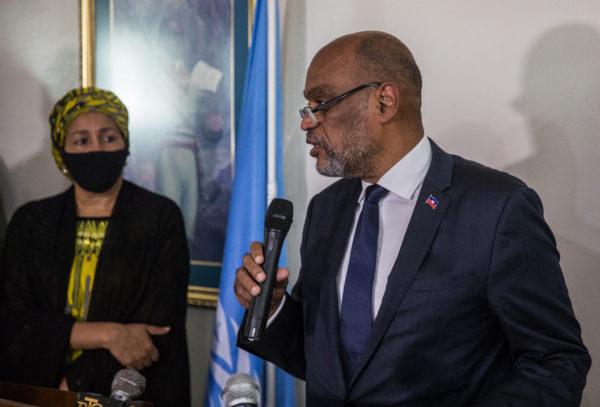
The request to have charges filed against Henry came on the same day Claude asked him to attend a meeting and provide an explanation for why he spoke twice with a key suspect in the assassination of Moïse, Joseph Felix Badio, just hours after the killing.
Henry was given a deadline on Sept. 14 to provide investigators with information about his ties to Badio, a former intelligence official. Henry has previously said he knew Badio but defended him and said he didn’t believe he was involved in the assassination. Badio disappeared after the killing and is being sought by police.
Henry attacked Claude in a letter on Monday, accusing him of a “serious administrative fault” and appointing a replacement, The Associated Press reported. Hours after Claude made the accusation, he was replaced by prosecutor Frantz Louis Juste.
However, it’s not clear if Claude’s request for charges came before he was ousted, as AP reports that the prime minister’s letter from Monday informed the prosecutor that he was to consider himself fired upon receiving the document.
Moïse was killed by gunmen in a nighttime attack at his home in Port-au-Prince in the early hours of July 7 in an assault that also left his wife Martine Moïse seriously wounded.
Initial reports following the assassination indicated the group of gunmen were speaking English and Spanish. Evidence shows Badio was in the vicinity of Moïse’s home at the time of the attack.
As the power struggle in Haiti prompted by Moïse’s death continues, Haiti’s Office of Citizen Protection has asked Henry to step down and called on the international community to stop supporting him. Henry was only named prime minister by just days before his death. But Henry on Saturday didn’t express any plans to step down.
“Rest assured that no distraction, no summons or invitation, no maneuver, no threat, no rear-guard combat, no aggression will distract me from my mission,” Henry said.
“The real culprits, the intellectual authors and coauthor and sponsor of the assassination of President Jovenel Moïse will be found and brought to justice and punished for their crimes.”
There are currently 44 people in custody in connection with Moïse’s death, including 18 retired members of the Colombian military, three Haitian-Americans, businessmen and Moïse’s security personnel, as authorities continue to pursue additional suspects. Badio is accused of arming the Colombian mercenaries.
As the investigation into the assassination continues, a new judge is now handling the case after the first one stepped down, citing personal reasons, after his assistant died under unclear circumstances.
However, Haitian law does not permit judicial officials to prosecute senior civil servants without authorization from the country’s leader, who is Henry at the present.
While Haiti was experiencing a spike in violence prior to the assassination, the death of the president and an August earthquake that left more than 2,000 people dead have exacerbated the nation’s turmoil.


