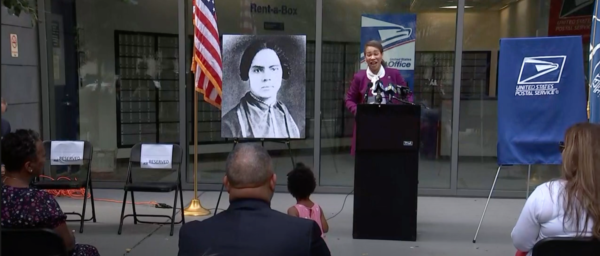
A post office in Delaware was renamed to honor the first Black woman to become a publisher in North America.
Wilmington Post Office officially changed its name to the Mary Ann Shadd Cary Post Office last month in honor of the pioneer. A ceremony was held in her hometown on Monday, Sept. 7, at the site located at 500 Delaware Avenue, Suite 1.
National Park Service claims the American Canadian anti-slavery activist and journalist was born in 1823 in the slave state of Delaware.
However, her parents were free and dedicated themselves to abolitionism. The Shadd family eventually moved north to Pennsylvania, a free state, where they assisted in the Underground Railroad.
Their involvement became even risker following the passing of the Fugitive Slave Act, which could force the return of individuals who’d run away from enslavement back to those who’d owned them. So, like many others like them, the Shadd family moved to Ontario, Canada.
She later met her husband, Thomas J. Cary. The pair had two children. She would eventually open a school for Black and white students. She also wrote and lectured about the importance of freedom while she was living in Canada. She earned her distinguished historic honor when she successfully published The Provincial Freeman.
Between the death of her husband and the Civil War, Cary found herself back in the U.S., this time helping recruit soldiers for the Union Army.
By the end of the war, an estimated 179,000 Black men had served in the U.S. Army, and another 19,000 served in the Navy, according to Archives.gov. Nearly 40,000 of them died throughout the war — 30,000 from infection or disease.
When the war ended, Cary moved to Washington, D.C., and enrolled in the first class of Howard University Law School, consequently becoming the first Black woman to attend law school in the U.S.
Cary continued her work as an activist, teacher and writer, crafting articles for a local Black newspaper called The New National Era. In addition, she was a founder of the Colored Women’s Progressive Franchise Association, and active in the women’s suffrage movement.
Cary’s other palms include becoming the first female publisher in Canada.