“In some ways I feel they are enjoying our pain, or they are in pain themselves and they know no other way how to deal with it,” said Ollie Gordon, Cousin of Emmett Till.
For the family of Emmett Till, every time one of the markers memorializing the tragic death of then 14-year-old Till is vandalized or damaged, it is like “pouring salt in an open wound,” says Ollie Gordon, who lived in the same home as Till at the time of his death.
“Prior to and before going through the pain that our family suffered and still suffer it today with the desecration of the signs and markers that’s a realistic memory of what happened to our family and to Emmett,” said Gordon.
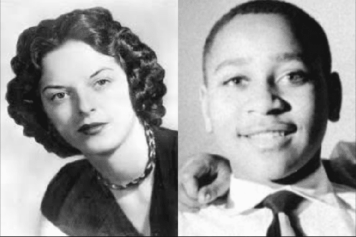
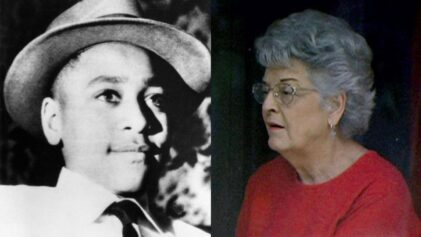
On Aug. 28, 1955, in Money, Mississippi, Till, a 14-year-old Chicago boy visiting relatives in Mississippi for the summer, was kidnapped from his relatives’ home at night, beaten, brutally murdered and thrown into the Tallahatchie River by several white men who thought he had whistled at a white woman at Bryant’s Grocery store.
The woman’s husband and his half-brother would be tried for Till’s lynching, and even though the all-white jury returned a verdict of not guilty, Till’s slaying became a seminal moment in the civil rights movement.
On the 66th anniversary of Till’s death, the Emmett Till Interpretive Center tweeted, “One of the markers placed in front of Bryant’s Grocery in Money, Mississippi is missing. It appears to have been hit by a vehicle and removed.”
“We’ve never had a sign that’s been accidentally vandalized or taken down these have always been intentional by folks who want to erase this history,” said Patrick Weems, the executive director of the Till Center.
Weems says since 2008 and the election of Barack Obama, Emmett Till signs and markers have been repeatedly vandalized in Mississippi, and one of the signs was shot at hundreds of times. That sign is now on display at the Smithsonian’s National Museum of American history in Washington, D.C.
Weems says the desecration tends to mirror the national conversation on race. Heading into the 2016 election of former President Donald Trump, the signs and markers also saw an uptick in vandalism.
“The idea of we need to change the physical and cultural landscape of our community and as soon as we started putting them up, they started coming down. We’ve had signs that have had acid thrown on them, we’ve had signs that have been shot up, we’ve had signs that have been thrown back into the Tallahatchie River, so it’s been a continual struggle,” said Weems.
L’Merchie Frazier is the education director at the Museum of African-American History in Boston, Massachusetts. She draws parallels between the killing of Till 66 years ago, and the desecration of markers memorializing him still happening today. She attributes the motivation of both incidents to “white possessive thinking.”
“It does not rest in each and every incident that is oppressive, but it rests in foundational thinking about how these things can be done and not be checked. But I think her bravery in saying open that casket and say, look world, this is what happened to my son because of how people think in America,” Frazier said.
Frazier references the decision of Till’s mother, Mamie Till, to leave the casket open at his funeral on Sept. 6, 1955, so the world could see his mutilated body.
Historical markers are set up throughout Mississippi commemorating the people and places in the state that played a role in the civil rights movement. Several of these markers are directly tied to Emmett Till. Two signs are owned by the state of Mississippi, and eight others are managed by the Emmett Till Interpretive Center.
“Not just assume this was an innocent accident, this happened on the anniversary week, 66 years to the date of the murder of Emmett Till. None of our signs have been accidentally knocked down,” said Weems.
The Emmett Till Interpretive Center and the Till family are pushing to have the markers become part of the National Parks registry, where they would be federally protected, and would-be perpetrators of vandalism and desecration could face federal criminal charges.
“To me as we keep Emmett’s legacy alive and we never want the world to forget, and because we don’t want it to be forgotten, then they are on a mission to make sure that this pain is penetrated more in-depth,” said Gordon.