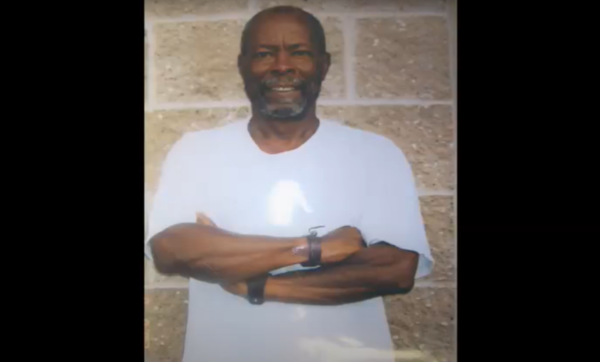
Activists filed new arguments on behalf of former Black Panther Sundiata Acoli in the New Jersey Supreme Court on Monday, arguing that he be granted parole nearly 50 years after he was arrested for killing a New Jersey state trooper.
Four Black law enforcement groups are among those arguing for Acoli, born Clark Edward Squire, to be released. Now 84, Acoli was convicted of first-degree murder in 1974 in the death of state Trooper Werner Foerster.
“Mr Acoli has spent more than half of his life in prison cells the size of a parking space, including nearly 20 years as a senior citizen … He should be granted parole,” the Black groups wrote, advocating for Acoli’s release.
The groups include the National Association of Blacks in Criminal Justice, the Black Police Experience, Blacks in Law Enforcement of America and the Grand Council of Guardians.
Court filings also cited Acoli’s good behavior and his positive contributions to the community while incarcerated. In addition, supporters say Acoli suffers from dementia and that his health has gotten worse since he contracted COVID-19 last year.
Acoli was sentenced to life in prison and has been eligible for parole since 1993. He has sought to be released for 30 years unsuccessfully. In 2014 Acoli was nearly released after a New Jersey appeals court determined he didn’t pose a threat to the public, but his release was overturned in 2016 by the state supreme court. Earlier this year, Acoli decided to appeal the decision.
Acoli was driving along the New Jersey Turnpike on May 2, 1973, with two Black Liberation Army associates, Assata Shakur (born JoAnne Chesimard) and Zayd Malik Shakur (James Costan) when the vehicle was pulled over because of a defective taillight.
In a struggle that followed, Foerster was struck with four bullets and died, and Zayd Malik Shakur was also killed. Another trooper was injured and Shakur and Acoli were arrested. Assata Shakur and Acoli were both convicted of murder in Foerster’s death and given life sentences. She was broken out of prison in November 1979 and eventually surfaced in Cuba by 1984, when she was granted asylum by that government. Shakur remains on the FBI’s most wanted terrorists list.
Disputes over how the shooting first broke out have carried on for decades. Acoli has maintained that he was shot, lost consciousness and doesn’t recall what happened that night.
Advocates for Acoli’s release say he is unlikely to offend again because of his old age, and that it’s not the parole board’s job to dole out punishment, saying the board ignored evidence supporting Acoli’s release.
“The Parole Board is not tasked with meting out punishment; that role belongs solely to the sentencing judge,” the police groups wrote.
Acoli is one of at least 11 former members of the Black Panther Party or the Black Liberation Army who remain in prison for acts committed in the 1960s and 1970s. Acoli is the oldest of all of those who remain behind bars.
“I am an 84-year-old man who’s been imprisoned since age 36 for almost 50 years, who now poses a threat not even to a flea, let alone public safety,” he wrote to The Guardian.
The New Jersey Supreme Court will consider Acoli’s case later this year or early next year.


