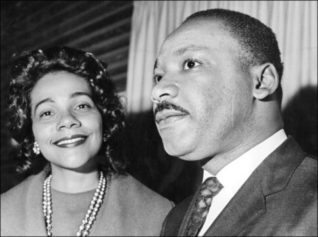
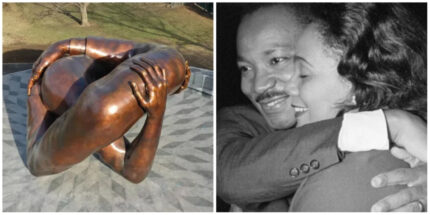
An estimated 50,000 people marched in Washington, D.C., on Saturday. Aug. 28, to protest against a wave of legislation voting rights advocates say will restrict voters’ rights.
Protesters also marched in cities across the country for voting rights 58 years after Rev. Dr. Martin Luther King Jr. led 250,000 people on the historic March on Washington for Jobs and Freedom.
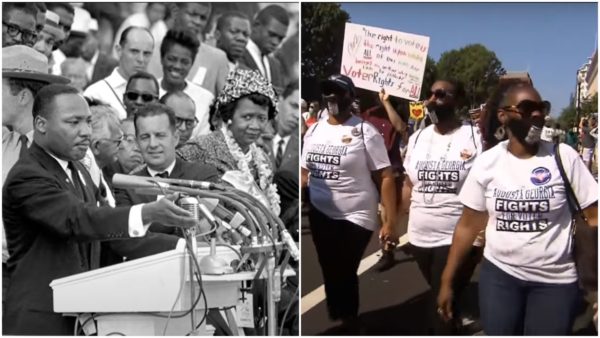
King’s son Martin Luther King III and other activists attended the march at the nation’s capital on Saturday, calling on the federal government to protect voting rights.
Theodore Dean, who marched in D.C. in 1963 with King, also participated in the demonstration.
“I’m here because I’ve got grandchildren and children,” the 84-year-old told the Guardian.
Since January, 48 states have introduced a combined 389 bills that “amount to shameful, outright voter suppression,” the March On for Voting Rights website says.
According to the Brennan Center’s July 2021 Voting Laws Roundup, at least 18 states have enacted 30 laws restricting the right to vote.
The laws make mail voting and early voting more difficult, impose harsher voter ID requirements, and make faulty voter purges more likely.
“This wave of restrictions on voting — the most aggressive we have seen in more than a decade of tracking state voting laws — is in large part motivated by false and often racist allegations about voter fraud,” the Brennan Center said.
This past weekend’s march was organized by Rev. Al Sharpton’s National Action Network and 180 partner organizations, and calls for the Senate to pass the John R. Lewis Voting Rights Advancement Act of 2021.
The bill, named after the Georgia congressman and civil rights leader who died in 2020, passed in the House on Aug. 24. Democrats say the bill will strengthen the Voting Rights Act of 1965, which has been weakened by the Supreme Court over the years, and make it harder for states to restrict voting access.
“It is wrong to restrict the rights of voters, and we must ensure that everyone has the right to vote, unencumbered. And voting rights should be expanded,” King III told CBS on Friday.
In an op-ed published the day before the march, King’s 13-year-old daughter Yolanda urged lawmakers to bring about change through legislation.
“Today, 58 years later, my grandfather’s dream is still not a reality. Racism is alive and well in our country. Here’s how I know: This year, 400 anti-voting bills have been snaking their way through states — and 30 have already been passed into law. Think about that: Lawmakers have passed 30 bills to stop people from voting,” she wrote. “Thirty bills that silence the voices of Black and brown people, immigrants, and young voters. The worst of these bills make it illegal to give food and water to voters waiting in line and prevent people from having a say in the direction of our country.”
The Senate will vote on the measure soon, although it is unlikely to pass.