Jurnee Smollett‘s longtime fans may remember her as Denise Frazer, the adorable and outspoken friend of Michelle Tanner (played by Mary-Kate and Ashley Olsen) in the hit ’90s sitcom “Full House.” They’ll be surprised to know that the former child star almost didn’t bother auditioning for the part because of the casting call.
The 34-year-old actress has been featured onscreen since before she could talk, and gained attention for her role in the hit ’90s sitcom “Full House.” Smollett, who joined the cast during the show’s fifth season as a recurring character, always brought laughs and tons of personality to the screen when she showed up. However, she came close to not auditioning because the original casting call was for a young white girl. At the encouragement of her mother, Janet Harris, Smollett auditioned anyway and the rest is history.
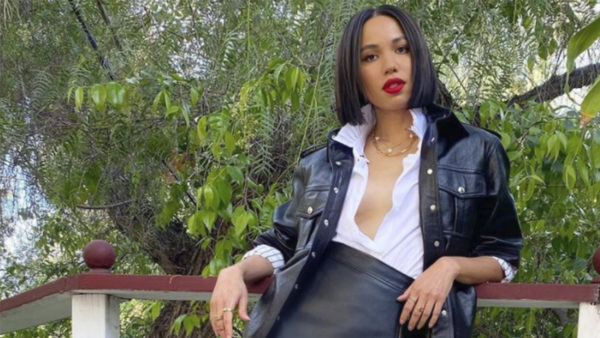
Looking back on her time as part of the cast, the “Lovecraft Country” actress is now “appreciative and grateful” that she went out for the part because of the impact it has left on young Black girls who grew up during the show’s original airing. “There’s a generation of young girls, women of color, who have repeatedly expressed to me [that they] didn’t see many young brown girls, young Black girls on TV during that time,” she told The Hollywood Reporter during an August issue interview. “Growing up with an image of a girl whose hair was curly, you know, it had an impact on them. I’m appreciative of and grateful for that.”
The “Eve’s Bayou” actress has been fortunate to sustain a successful career that has transitioned from child star to adult actress, and with her massive amount of talent it’s no surprise, however, Smollett has also been open about the darker side of fame that she has experienced along the way. “I don’t know that I can confidently say that I worked on one job prior to ‘Lovecraft [Country]’ from the time I was 12 on where I hadn’t been sexually harassed, whether it was by an AD, a co-star, director, producer,” she previously told The Hollywood Reporter.
As she’s grown, the Emmy Award nominated actress has become comfortable with setting up her boundaries from the beginning of any project. “And I don’t apologize,” she said. “It’ll be like, ‘Listen, this fake-a– sexual harassment meeting that we’re having, I’m going to raise my hand now and let you guys know that the standards that they’re setting are bare minimum.’ “
Smollett’s entire family is no stranger to the entertainment industry. Her brother Jussie Smollett starred in the FOX hit series “Empire,” and they, along with their four siblings, Jojo, Jake, Jazz and Jocqui, starred in the family sitcom “On Our Own,” which ran for one season (1994-1995) on ABC-TV.