A Black-owned company specializing in making swim gear, specifically swim caps for women with natural hair, was denied certification into the Tokyo Olympics, leaving many people on social media to believe that the decision was rooted in racism.
According to a report published by Metro on Wednesday, June 30, the International Swimming Federation (FINA) rejected an application from a brand called Soul Cap, established in 2017. FINA claims, given the organization’s “best knowledge, the athletes competing at the International events never used, neither require to use, caps of such size and configuration.” They further stated that the caps don’t follow “the natural form of the head.”
Following the announcement, Soul Cap released “a message from our founders,” Michael Chapman and Toks Ahmed, on their official Instagram account explaining that they had hoped to provide a solution at the Olympics for athletes with natural hair so that “swimmers at any level don’t have to choose between the sport they love and their hair.”
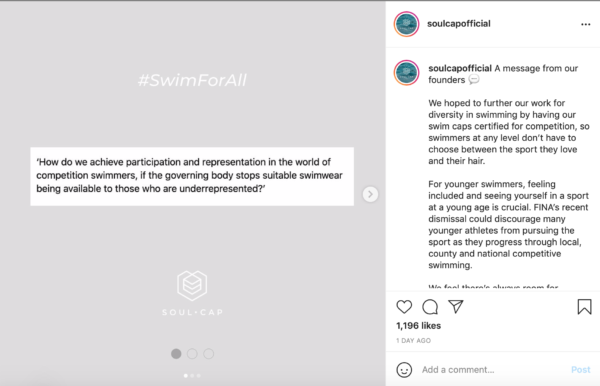
The statement stressed the importance of inclusivity in sports, noting that FINA’s decision to dismiss their application “could discourage many younger athletes from pursuing the sport as they progress through local, county and national competitive swimming.”
“We feel there’s always room for improvement, but there’s only so much grassroots and small brands can do — we need the top to be receptive to positive change. A huge thanks to all who have supported us and our work so far. We don’t see this as a setback but a chance to open up a dialogue to make a bigger difference.💧,” the statement concluded.
News of the brand’s rejection from the competition angered many people online, including one Twitter user who wrote, “Black women go thru life dealing w/ sexism/racism. Told our natural hair is untamed/ugly. We’ve been made to feel we have to adopt a different standard. Shame on @fina1908 for not recognizing diversity & inclusion. #FreshEmpowersWomen #RaiseAFist.”
“This is discouraging,” expressed another person. “Fina’s statement shows they have zero understanding of Black hair. This is a frustration for WOC and we have never had an option designed for us.”
A third commented, “Right. This is horrifying. @soulcapofficial did the right thing. The made inclusive swimwear for natural hair and the @Olympics has the audacity to say ‘elite athletes’ do not require this? Who are these ‘elite athletes’ they speak of? What do they look like?”
According to the 2020 FINA Olympic rule book, it’s “permissible to wear two swim caps.” In addition, manufacturers of new swimwear and caps that include “a new design, construction, or material” must “submit the swimwear to FINA to obtain its approval” before use in competitions.
In a statement to Insider, Chapman and Ahmed expressed that “this isn’t just about the Olympics.” Ahmed continued, “This is also about the lower leagues of competition swimming — for swimmers at an age where feeling included is so pivotal in their development and goals. We don’t see this rejection as a setback, but rather a chance to open up an important dialogue and make a bigger difference.”
The business partners say they have seen an outpouring of support since the ruling and hope that their story “highlights the lack of diversity in aquatics and drives long-term change in sporting rules.”


