Minnesota Department of Corrections officials has determined that former Minneapolis Police officer Derek Chauvin will not be moved to a lower-security prison for booking and assessing, as is the usual protocol following sentencing.
Chauvin, who was found guilty of killing George Floyd by kneeling on his neck for approximately nine minutes and 29 seconds has been held at the Minnesota Correctional Facility at Oak Park Heights since his April 20 conviction and will not be moved following his Friday, June 25, sentencing to 22.5 years.
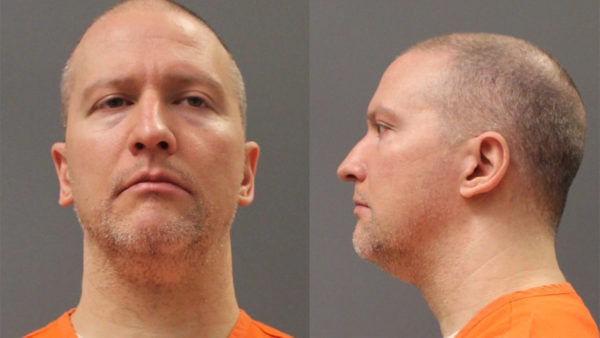
There was prior speculation that Chauvin would be moved to the lower-security facility at St. Cloud, however, a Minnesota Department of Corrections spokesperson clarified that he will remain at Oak Park Height because “it would not have made sense” to move him.
“He was at Oak Park Heights for his safety pre-sentencing,” the spokesperson said. “Since he was already at Oak Park Heights and was going to stay there, it would have not made sense to bring him up to St. Cloud.”
Instead, Chauvin will remain at the only Level Five maximum security prison in the state, where he has been living apart from the general population of the prison in the Administrative Control Unit, “a restricted housing unit that is operated at the highest level of security,” since April. Pre-sentencing, Chauvin reportedly spent 23 hours a day in solitary confinement and was allowed one hour to leave his cell to exercise.

According to the prison’s data, “there are 364 adult offenders who have an active sentence on
file,” and 276 of them are serving time for homicide. Some 44 percent of the inmates at the facility are Black, while 39 percent are white, and the average length of a sentence served at Oak Park Heights, excluding life sentences, is 142 months. Minnesota law dictates that inmates must serve a minimum of two-thirds of their sentence, so Chauvin could be released in as little as 15 years.
Chauvin’s sentencing sparked a wide spectrum of responses, from joy to frustration at the length of time sentenced. Philonise Floyd, George Floyd’s brother, expressed that he’s felt a bit of both.
“I just think he should have received the maximum amount,” he told NPR. “This is just accountability. I think this was a slap on the wrist. And, you know, a lot of people are looking at this, and they want to know what’s going on with America. But at the same time, he did get sentenced, so that was a good thing. But that was basically one of the things that the world has watched all over again. We never thought that we’d have a police officer even get time in jail like this.”