More than 60 years after he was denied enrollment into a medical program at a private university because of the color of his skin, a Georgia doctor is receiving a long-time coming apology.
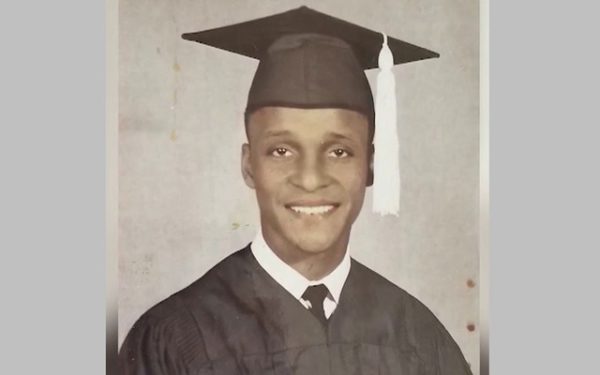
In 1959, Marion Hood applied to be a student at Emory University in the busy city of Atlanta. However, less than a week later, he received a letter from the school rejecting his application for no other reason other than because he was Black, The Atlanta Journal-Constitution reported.
“Dear Mr. Hood,” the notice began. “Acknowledgment is made of your letter of July 30, enclosing your application for admission to our School of Medicine. I am sorry I must write you that we are not authorized to consider for admission a member of the Negro race.” “I regret that we cannot help you,” the letter that hung on Hood’s wall since concluded. Along with a denial letter, Hood was given back his $5 application fee.
Now 62 years later, as part of its June 16 program celebrating Juneteenth and its establishment as a national holiday, the same school is apologizing for its racial slight. In a statement during the program, President Gregory L. Fenves highlighted the error stating that Hood was rejected for “no other reason that the fact that he was Black” and that the letter “vividly shows the systematic injustice of that time and the legacy that Emory is still reckoning with.”
He continued, “Throughout American history and Emory history, Dr. Hood and so many other talented students were denied access to achieve their dreams to realize their potential.”
In addition, the school’s dean, Vikas P. Sukhatme, sent a letter to Hood, which read, “On behalf of Emory University School of Medicine, I apologize for the letter you received in 1959 in which you were denied consideration for admission, due to your race. We are deeply sorry this happened and regret that it took Emory more than 60 years to offer you our sincere apologies.”
Hood subsequently went to Clark College before studying medicine at Loyola University in Chicago. He later became a respected gynecologist and obstetrician. However, the now-83-year-old said he never let the rejection notice get to him.
During the event, he emotionally recalled being taken aback when he graduated from Clark in 1959, and his soon-to-be alma mater gave an Emory University professor an honorary degree. “I thought, he can come to my school and get an honorary degree, and I can’t put my foot on his campus,” Hood said.
The doctor graduated in 1966, opened up a practice in Atlanta less than ten years later, and delivered more than 7,000 babies before retiring in 2008.
The publication reported that Emory desegregated three years after Hood was denied. In 1963 they admitted their first Black medical student, Hamilton E. Holmes. Sukhatme told the outlet that as of today, only 16 percent of Emory’s medical students are Black.
In 2019, the school found itself apologizing after racist images in past yearbooks resurfaced. The then-president Claire E. Sterk decided not to remove the photos that can be found online and appeared to mock lynching, stating, “It is my fervent hope that they will serve as an indelible reminder to all current and future Emory students, faculty, and staff of the type of ignorance and hate we must passionately oppose.”


