On Friday, May 21, the Georgia Historical Society announced the unveiling of a new historical marker in Richmond County that honors one of the richest Black women of the 19th century.
The marker, recognizing Amanda America Dickson Toomer, is located at her final home at 448 Telfair St. in Augusta, Georgia, where she spent the last seven years of her life.
John Hock, the owner of the home, worked with a team of subcontractors to renovate the exterior of the home.
“This whole project was to commemorate the life of Amanda, and I think we did it,” Hock said.
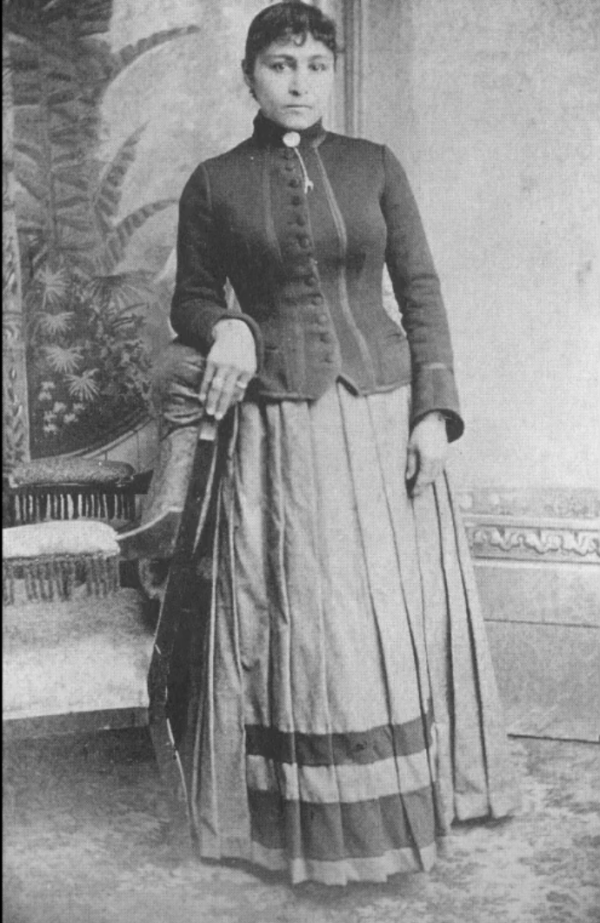
Toomer was born in Sparta to 41-year-old Hancock County plantation owner David Dickson and Julia Frances Lewis, a 12-year-old slave, in 1849. Although she was legally a slave owned by her grandmother, Toomer was raised in her father’s house, learned to read and write and play the piano, and was taught to practice social etiquette.
At 15, Toomer had a relationship with her 29-year-old white cousin Charles Eubanks. The two had two sons and were essentially married, although Georgia law did not permit interracial marriages.
When Dickson died in 1885, Toomer, Dickson’s only child, inherited 15,000 acres of land and $500,000, worth about $3 million today, through his will. She is considered to be Augusta’s first Black millionaire. The value of the entire inheritance is estimated to be about $8 million.
Dickson’s white relatives scoffed at the idea of a biracial woman and legal slave receiving the inheritance, but Toomer had a plan to secure the money and land.
“She let it be known that if they upheld the will, she would forgive all the debts to her farmers,” said her biographer. Dr. Kent Anderson Leslie. “That totaled 147 people — including two members of her trial jury. Amanda won her case, and the Georgia Supreme Court later upheld it.”
Toomer moved to the house on Telfair in 1886 and was welcomed by prominent Blacks as the white community in Augusta rejected her. She went on to support the Augusta community through philanthropic efforts, and was known for her attendance at Mother Trinity Church. In 1892, she married biracial attorney Nathan Toomer, then died less than a year later at age 43 of “nervous prostration,” after falling ill. At the time of her death, Toomer was one of the richest Black Americans in the country.

The marker is the newest one introduced to the trail by the Georgia Civil Rights Trail Initiative.
“She was a very unique woman, and it’s nice to have her history here at this building to be sort of a symbol in Augusta,” said Hock, who is also vice president of Hock Development, which helped erect the marker. “I think it’s a story Augusta would like to know.”


