“Phenomenal Woman” and iconic poet Dr. Maya Angelou will soon become the first Black woman featured on the tails-side of a U.S. quarter.
The U.S. Mint announced Angelou and Sally Rider, the first American female astronaut to fly in space in 1984, as the first two women chosen for its American Women Quarters Program. The program’s intention is to recognize women who have greatly contributed to the fabric of America.

“I am pleased to see that the first women to be recognized under my bill are outstanding individuals in the fields of science and literature: Dr. Sally Ride and Dr. Maya Angelou,” said Rep. Barbara Lee (D) of California, who introduced the legislation to the U.S. Treasury for consideration.
“They paved the way for many who came after them and inspired young women to carry on their legacy. Our goal in working on this legislation was to honor phenomenal women like Dr. Maya Angelou and Dr. Sally Ride. I’m glad they are among the first of many to be recognized,” she continued.
The heads-side of the coin will feature a revitalized rendering of Georgia Washington. In total, 20 women will be chosen to grace the coin that will be issued over the span of four years.
Throughout her career, Angelou was celebrated for her writing. During the ’50s and well into the ’60s, Angelou, born Marguerite Johnson, was among the likes of James Baldwin. She even joined Dr. Martin Luther King Jr. in the fight for civil rights.
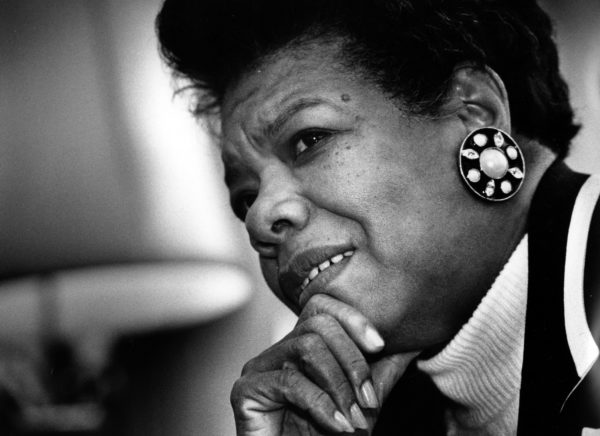
In 2000, she was awarded the National Medal of Arts by President Bill Clinton, and in 2011, the Presidential Medal of Freedom from President Obama. The “I Know Why the Caged Bird Sings” writer passed at the age of 86 on May 28, 2014.
On social, news of the updates to U.S. quarters expected to begin rolling out in January 2022 was met with mixed reactions.
“Let’s continue to honor women in this way.”
“I mean they could have at least made it look like Maya.”
But things quickly went left when people questioned the stall on replacing former U.S. president Andrew Jackson with Harriet Tubman on the $20 bill. Jackson was notoriously known for owning hundreds of slaves as well as for supporting the removal of Native Americans from their native lands as part of the “Trail of Tears.”
“We were promised #HarrietTubman on the Twenty. When will we see that?”
Obama introduced the initiative to place Tubman on the bill in 2016. However, the effort was not achieved as expected in 2020. But now, with Obama’s former vice president Joe Biden serving as president, the initiative is being revisited.
“It’s important that our notes are… reflective of the history and diversity of our country and Harriet Tubman’s image gracing the new $20 note would certainly reflect that,” said White House Press Secretary Jen Psaki.