Reunited and it feels so good.
Lisa Wright had “no idea” who her biological mother was before taking her DNA test but, as the saying goes, sometimes what you’re searching for is right in front of you.
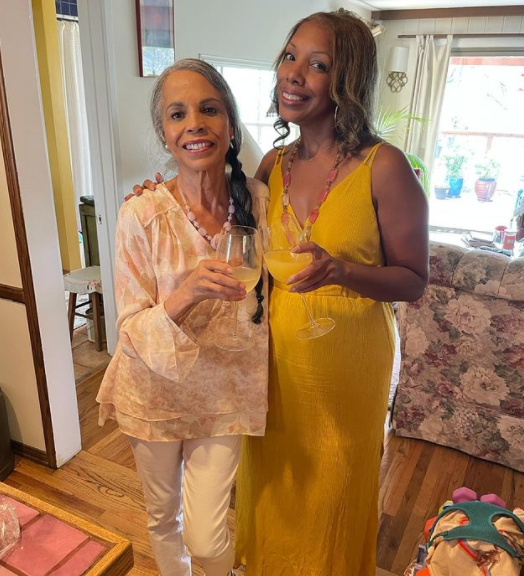
Wright, who was adopted, had no interest initially in setting out to look for her biological parents. She told the “Today” show on May 7 that she knew she was adopted and she knew it was a closed adoption, one where the biological parents and the adoptive parents have no contact. But that’s not all, she also was aware that her birth mom loved her.
“My (adoptive) mom told me, ‘Your mommy loved you, but she was really young, and she knew she couldn’t take care of you. I wanted the baby so bad, and that’s why your mom let me take care of you. You weren’t abandoned. This was just the best thing for you,’” she explained.
Fast forward years later, Wright becomes a mom herself, and when she turns 54 she’s encouraged by her adult son to take a genetic heritage test. Along with the results, Wright received an unexpected family match.
An alert notified her of a previously unknown uncle, and she said, “I just reached out and said, ‘If you’re open to it, I would love to chat with you to see what all of this means.’” Within a few days, Wright was able to reach her uncle on the phone. He asked her to tell him her background, and she proceeded to tell him what she knew. ‘Well, I was born on Dec. 10, 1964. I was told that my biological mom was very young when she had me. She moved to L.A. because she wanted to be in Hollywood.’ And then he just stopped me right there,” she said.
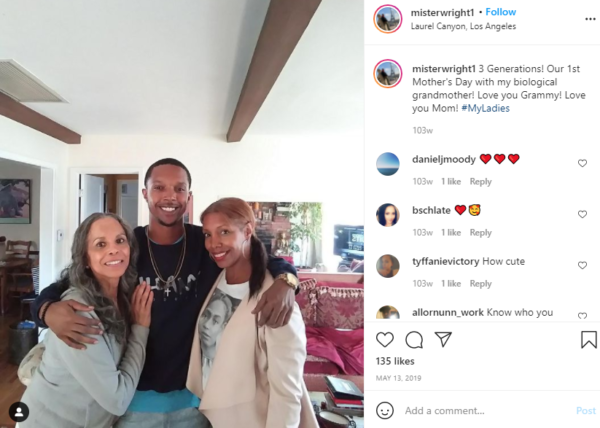
Worried that he was going to give her some bad news, Wright was shocked to hear him say, “Lisa, you’re my niece. We’ve been looking for you. We’ve all been looking for you.” Wright also found out from her uncle that she was closer to her mom than she knew. Her mother happened to live in Los Angeles just like she did.
Minutes went by and Wright said she received another call, this time from her biological mother, whose name is Lynne Moody. “A voice on the other end says, ‘Is this my daughter?’ she said. “And then I just went, ‘Oh, my God, is this my mother? And then she goes, ‘Yes, sweetie, this is your mom.’ It was just the most indescribable feeling.”
Moody said reconnecting with her daughter felt like “giving birth” all over again. “I lost my legs, I was on the floor in a fetal position, screaming and crying. I didn’t know how deep that hole was,” she explained.
As if all of these surprises were not enough, Wright also discovered that she actually used to grow up watching her mother on television. Moody, who was 18 when she gave Wright up for adoption, played Tracy Curtis Taylor in the 1970s ABC sitcom “That’s My Mama.” Wright said, “I grew up watching my mother on TV and didn’t even know it,” adding that it was something her family watched weekly. Wright, of course, at the time would’ve never guessed she was related to the person she watched on screen every week, but she knows “that’s my mama” now.


