After making history as North Carolina’s first Black woman to serve as chief justice of its Supreme Court, Democrat Cheri Beasley, is in danger of losing her seat. The tight race has Beasley trailing opponent Paul Newby by 406 votes, prompting a recount that started Thursday, Nov. 19.
Newby, who is a white Republican and a senior associate justice on the court, has often been an outspoken critic of Beasley in his dissents, according to Slate.
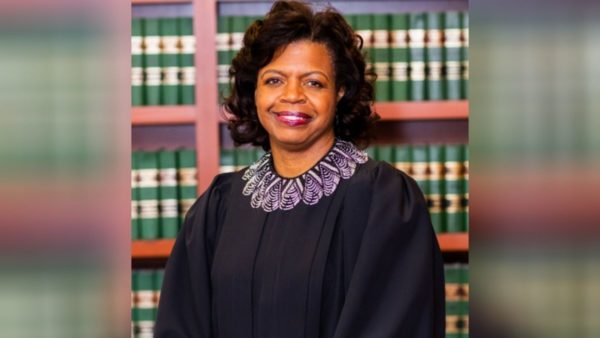
One such instance occurred in June when Newby condemned Beasley and four other Democratic justices on the state’s seven-member supreme court after they ruled against the Republican-controlled state legislature in a case involving a new law that would revoke victories death row inmates won under the Racial Justice Act. The act enacted in 2009, allowed death row inmates to appeal their capital sentences on the basis of racism before it was repealed by the state legislature in 2013.
Beasley detailed the history of racism in North Carolina’s criminal justice system in her opinion writing, “African Americans are more harshly treated, more severely punished, and more likely to be presumed guilty.”
Newby was among those to dissent. He accused his colleagues of “extraordinary judicial activism” and said they “may have a larger purpose: to establish that our criminal justice system is seriously — and perhaps irredeemably — infected by racial discrimination.”
Also upset Beasley was appointed as the court’s chief justice over him by Gov. Roy Cooper in 2019, Newby has launched what some deem disturbing attacks with racial undertones on Beasley and another Black colleague on the court, Justice Anita Earls.
Racial justice advocates fear the progress the court has made under Beasley’s leadership could be overturned if Newby wins. Progressives would be down to a 4-3 majority on the court if Beasley loses, as one other Democratic justice lost a bid for reelection this month.
“Big stakes for civil rights,” tweeted journalist Daniel Nichanian, during a thread where he posted minute-by-minute election results.
Nearly 5.4 million ballots were cast in the judicial race, according to The Associated Press. Beasley requested the recount on Tuesday, Nov. 17, after unofficial totals showed her trailing by 366 votes, a number that now stands at 406.
The county’s board of elections must complete the recount by Wednesday, Nov. 25. Karen Brinson Bell, the executive director of the State Board of Elections, said they will be diligent in making sure there is an accurate count.
“We cannot express enough gratitude for the hard work of our county boards of elections, who continue to ensure accurate and fair results in this election,” Bell said. “Recounts are an important part of the elections process that help guarantee voters’ wishes are realized in the closest of contests.”
Beasley said she will not concede until all votes are recounted.
“The race for Chief Justice will not be over until every single vote has been counted,” Beasley said. “Our team has officially requested a statewide recount and will be filing protest petitions across the state to ensure over 2,000 absentee and provisional ballots that were wrongfully rejected are included in the final tally. This race is far from decided, and we look forward to ensuring the counting process continues so that every voice is heard.”