Compton is launching a universal basic income initiative that will give disadvantaged families a few hundred dollars a month with no strings attached.
Compton Mayor Aja Brown announced the program, titled The Compton Pledge, on Monday, Oct. 19. Brown partnered with Jain Family Institute, a research group, and several community organizations to give 800 low-income families a recurring monthly payment for two years. Researchers will monitor the recipients’ spending habits to determine the initiative’s effect on poverty.
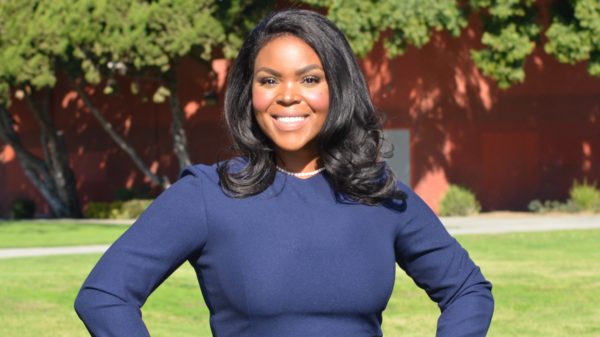
“I recognized that there’s a need for additional income, especially with the pandemic resulting in record high numbers of unemployment throughout the entire country,” Brown told The Los Angeles Times. “This is a great opportunity to address inequalities for Black and brown people and also additional opportunities for upward mobility.”
Brown, the youngest mayor to be elected in Compton, grew up in a single-parent household and knows how hard it can be to make ends meet.
“I know firsthand what guaranteed income could have done for my mother. I’ve watched the many sacrifices she made, including walking to work to provide for my brother and I,” Brown said in a news release. “Like most Americans, we were one emergency away from having to move, which we did many times, if anything unplanned happened because of her restricted income and prioritizing being present for her children.”
The exact amount to be awarded has not been revealed, but the families will be able to choose from different payment options. People without bank accounts will receive complimentary financial planning services.
The Compton Pledge will be the largest universal basic-income program in the country.
Former presidential candidate Andrew Yang included the concept in his campaign platform. He called it a “freedom dividend,” which would have paid every American adult $1,000 a month. Critics of UBI express concern about people using the money for nefarious purposes like drugs and alcohol.
However, a similar program in Stockton, California, found recipients spent most of the money on necessities like food, bills and car repairs, according to The Associated Press.
The Compton Pledge will launch later this year.


