NFL commissioner Roger Goodell expressed regret about how he responded to Colin Kaepernick protesting systemic police misconduct and racism by kneeling for the pregame performances of the national anthem during the 2016 season.
Goodell appeared on Emmanuel Acho’s “Uncomfortable Conversations with a Black Man” YouTube series in an interview posted on Sunday, Aug. 23. At around the 5:03 mark, Acho, a former NFL linebacker, asked him how he would apologize to Kaepernick if given the chance.
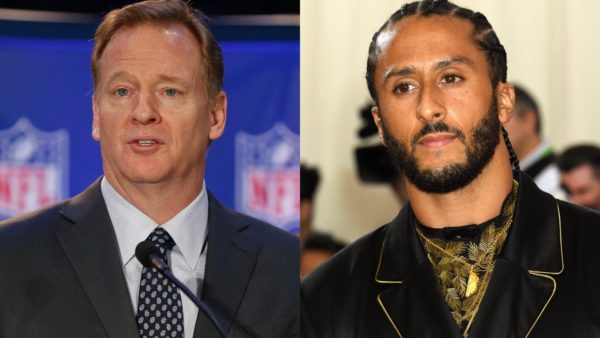
“Well the first thing I’d say is I wish we had listened earlier, Kap, to what you were kneeling about and what you were trying to bring attention to,” said Goodell. “We had invited him in several times to have the conversation, to have the dialogue. I wish we had the benefit of that. We never did. We would have benefited from that. Absolutely.”
Kaepernick was the San Francisco 49ers starting quarterback when he began kneeling for the national anthem in 2016, a move that many in the Black community championed, while others, including Donald Trump, said he was disrespecting the American flag.
The Wisconsin native became a free agent in 2017 but was never signed by a team. So in October of that year, Kaepernick and former teammate Eric Reid, who knelt with him, filed a collusion suit against the league, which they’ve already settled.
But the NFL Network reported in June that multiple teams are interested in signing Kaepernick, but they couldn’t give him a workout because of COVID-19 health restrictions.
Elsewhere in the interview, Goodell was asked what he knows now about the kneeling protests that he didn’t know before.
“I didn’t know what was going on in the communities, and when I had the chance to sit with our players, I never had the chance to sit with Kap,” he explained. “But I talked with Kenny Stills a lot, Eric Reid, Malcolm Jenkins, Anquan Boldin. So many other players … Some of them sacrificed a great deal.”
The commissioner also said that he’s frustrated by those who believe Kaepernick and others were protesting the American flag with their kneeling and not racism.
“It is not about the flag,” Goodell stated. “The message here is that what our players are doing is being mischaracterized. These are not people who are unpatriotic. They’re not disloyal. They’re not against our military. In fact, many of those guys were in the military and they’re military family. What they were trying to do is exercise their right to bring attention to something that needs to get fixed. That misrepresentation of who they were and what they were doing was the thing that really gnawed at me.”