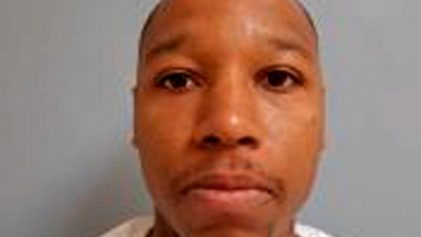
The hanging death of 24-year-old Robert Fuller is the result of suicide, according to Los Angeles County officials. Fuller, a Black man, was found dead on June 10 in Palmdale, California. Chris Marks, a commander with the Los Angeles County Sheriff’s Department, declared the death a suicide at a Thursday, July 9 news conference.
“The medical examiner issued their final autopsy report and delivered it to the sheriff’s department, and deemed this case has to be a suicide,” said Marks.

He also shared that Fuller suffered from a history of mental illness and had gone to a California hospital in February 2019, saying he was hearing voices telling him to kill himself. Marks also stated that Fuller was treated for suicidal ideation at a Nevada hospital in November 2019, and that scars on his wrists indicated past suicidal intent. Marks added that officials responded to an incident in February 2020, in which Fuller “allegedly attempted to light himself on fire.”
At the news conference, Los Angeles County Sheriff Alex Villanueva called on the board of supervisors to “properly fund mental illness treatment centers,” adding that they typically run “overcrowded and insufficient.”
Initially, a post-mortem examination that identified Fuller’s cause of death as suicide was rejected by Fuller’s family, which led to further investigation. “For people to say he did this, this wasn’t Robert. For him to tie himself to that tree, it’s not possible,” Fuller’s friend Tommie Anderson said at the time. In the days after Fuller’s death, the LA coroner walked back this initial ruling following nationwide backlash, saying he believed “that we should look into it a little more deeply and carefully, just considering all the circumstances at play.”
Fuller’s death came just two weeks after another Black man, Malcolm Harsch, also from California, was found hanging from a tree in a similar manner. Between May 27 and June 17, six Black people, including four men, a woman, and a teenager, were found hanging from trees in states like California, New York, Texas and Oregon.
Officials say on the eve of his death Fuller attended a Black Lives Matter protest over the death of George Floyd of Minneapolis. A passerby saw his body hanging from a tree in Poncitlan Square. Security camera video obtained by investigators showed a nearby street, but not the tree from which Fuller was hanging.
Marks said the tree was “climable by someone of Mr. Fuller’s age and physical stature,” and that there were no signs of a struggle and no defensive wounds. “His hands were not bound, and there was no evidence he attempted to remove the ligature from his neck,” he continued. According to officials, Fuller purchased a red rope similar to the one used in the hanging on May 14, about one month before his death.
The sheriff said Fuller’s family was out of town during the news conference and unable to attend. The family is awaiting the results of an independent autopsy. Family attorney Jamon R. Hicks scheduled a news conference for late Friday morning.