A recent poll determined Black Americans are more likely to know someone who died from COVID-19 compared to white and Latino people.
A Washington Post-Ipsos poll of 1,153 African-American people found 31 percent knew someone who died from coronavirus. In comparison, only 17 percent of Latino people and 9 percent of white people know someone who lost their battle with the disease.
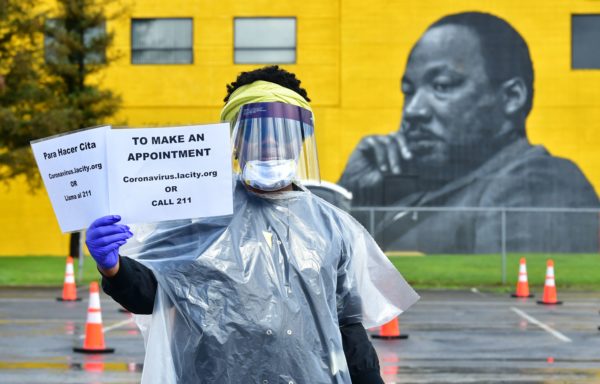
The Black community has been ravaged by the virus, which has killed more than 128,000 people and infected more than 2.6 million in the United States. The COVID Racial Data Tracker reports Black people account for 23 percent of deaths where race is known. African Americans only make up 13 percent of the United States population.
The pandemic’s effect on the Black community can be traced to systemic racism’s effect on health care. As NPR noted, Black people are more likely to suffer from preexisting conditions like diabetes and hypertension. They have less access to quality health care and are more likely to be essential workers, making them more susceptible to infection.
“I’ve been at health equity research for a couple of decades now. Those of us in the field, sadly, expected this,” Dr. Marcella Nunez-Smith, director of the Equity Research and Innovation Center at Yale School of Medicine, told NPR in May.
“We know that these racial ethnic disparities in COVID-19 are the result of pre-pandemic realities. It’s a legacy of structural discrimination that has limited access to health and wealth for people of color.”
Health experts believe accurate data is key to combating the virus. About 48 percent of infections and 9 percent of deaths have no connected racial data.
“Data is the only way that we can see the virus,” Thomas LaVeist, dean of Tulane University’s School of Public Health and Tropical Medicine, told NPR. “We only have indicators. We can’t actually look at a person and tell who’s been infected. So, what we have is data right now.”
“If we don’t know who is sick, we’re not going to know in six months, 12 months, 18, however long it takes, who should be getting the vaccination,” said Dr. Utibe Essien, a health equity researcher at the University of Pittsburgh. “We’re not going to know where we should be directing our personal protective equipment to make sure that health-care workers are protected.”