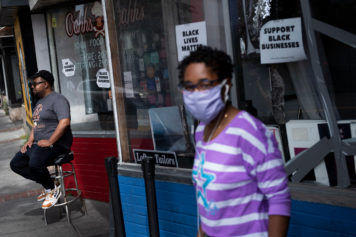
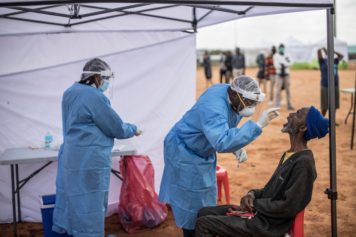
A few weeks ago, many believed Black people were immune to coronavirus, but data is beginning to show the exact opposite.
Data from several states shows Black people are contracting the virus at disproportionately high rates compared to other demographics. Milwaukee has been under scrutiny for the high number of cases in the city’s predominately Black side of town. Eighty-one percent of coronavirus-related deaths in Milwaukee County were Black people. Only 26 percent of Milwaukee County residents are African-American.
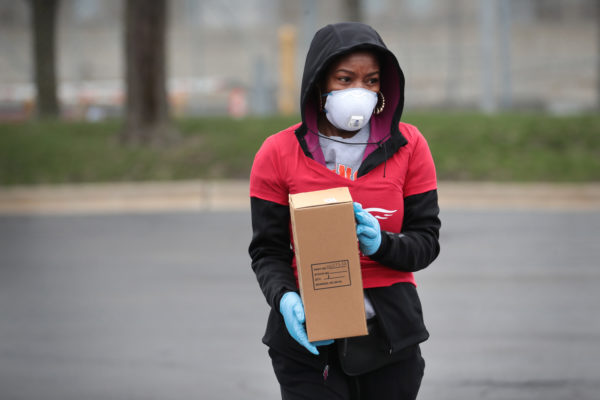
Louisiana, Illinois, Michigan and North Carolina are showing similar patterns, according to ProPublica.
The Illinois Department of Public Health reported the state’s Black residents make up 30.1 percent of diagnoses. In North Carolina, Black people are second behind whites with 36 percent of cases. Black citizens make up 14.6 percent and 22.2 percent of the population, respectively, in those two states, per the Census bureau. Louisiana hasn’t published a racial breakdown of diagnoses but 40 percent of the state’s deaths occurred in the predominately African-American Orleans Parish.
Black Michiganders make up 14 percent of the state population but 35 percent of diagnoses and 40 percent of deaths.
Despite these alarming statistics, the Centers for Disease Control has not published race-based data. Dr. Camara Jones, a physician and Harvard fellow, believes gathering data on race will highlight disparities in the American health care system.
“COVID is just unmasking the deep disinvestment in our communities, the historical injustices and the impact of residential segregation,” Jones explained to ProPublica. “This is the time to name racism as the cause of all of those things. The overrepresentation of people of color in poverty and white people in wealth is not just a happenstance. … It’s because we’re not valued.”
Black people are already having trouble seeking proper medical care in the midst of the pandemic. National Public Radio reports that a data firm analyzed billing records from several states and found that symptomatic Black people are less likely to be recommended for testing.
The high diagnosis rate combined with a health care system historically riddled with racial inequities could spell disaster.
“We know in the US that there are great discrepancies in not only the diagnosis but the treatment that African Americans and other minorities are afforded,” Dr. Ebony Hilton, an associate professor of anesthesiology and critical care medicine at the University of Virginia, told BuzzFeed News recently in advocating for more transparency in COVID-19 demographics data.
“So I want to make sure that in this pandemic, that black and brown people are treated in the same way and that these tests are made available in the same pattern as for white people,” Hilton added.