As an author and educator, Yvette Manns knows how important it is that children see themselves in the world around them, whether it’s in a movie, on a concert stage or in a great book.
Unhappy with the lack of representation of Black and brown characters in children’s literature, Manns took it upon herself to write a book that not only celebrates Black people, but the magic of Black history and culture, too. Cue the birth of “HBCU Proud,” the story of a young child on a journey to learn the rich legacy of historically Black colleges and universities.
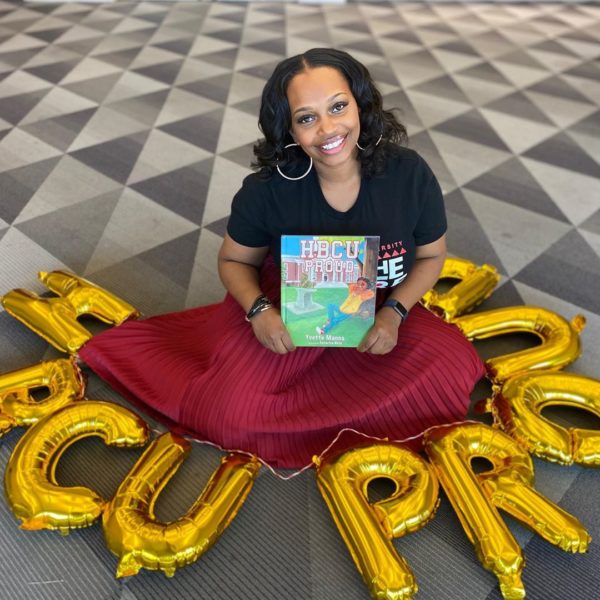
“For children, I want them to intentionally say if it’s a little black boy, ‘hey, he looks like me,’ or if it’s a little black girl, ‘hey, she looks like me,’ or ‘they look like someone I know,’ ” Manns told Atlanta Black Star in an exclusive interview. “I just want them to see themselves depicted in the pages of the book.”
As a first-generation college graduate and proud alumna of Clark Atlanta University, the New York native has made a career as a literacy researcher and educator. Manns, 33, now uses her work to inspire the next generation and spends time volunteering with aspiring primary school teachers at her alma mater, which partly served as inspiration for what she describes as a “realistic fiction” storybook for kids.
“I think so many times Black children have to experience someone else’s world through literature,” she said. “And so I want our children to read an enjoyable story. I want them to keep themselves first, and, secondly, I want them to learn about historically Black colleges and universities.”
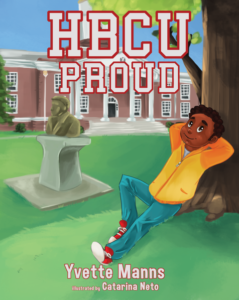
“HBCU Proud” follows main character Q as he embarks on a tour at the illustrious Legacy University, where he gets his first taste of the Black college experience. On his visit, he soaks up the history, the people, the culture and importance of HBCUs and all they have to offer.
The historic colleges, which will receive a restored $255 million in annual funding thanks to a bipartisan bill signed by President Donald Trump late last year, offer Black students a unique experience rooted in tradition, and are known to produce the best and brightest future leaders. Notable figures including Oprah Winfrey, Martin Luther King Jr. and Atlanta’s own Mayor Keisha Lance Bottoms all attended HBCUs.
Manns herself is a proud HBCU grad, earning her degree from CAU in 2009.
What’s more, HBCUs produce 25 percent of Black graduates with degrees in science, technology, engineering and mathematics, according to the United Negro College Fund. A 2019 report by the Samuel DeWitt Proctor Institute for Leadership, Equity & Justice also found that HBCU alumni were more “upwardly mobile” than their peers who attended predominately white institutions (PWIs).
Historically Black colleges were founded during a time of African-American disenfranchisement, when Blacks, especially in the South, were denied access to majority-white institutions of higher learning.
For Manns, attending Clark Atlanta gave her a sense of belonging.
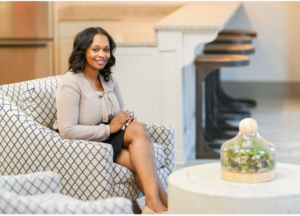
“The HBCU experience for me really helped mold me as the individual I am today,” she said, “because the biggest takeaway I had was that there were no limitations on who I could be. I was allowed to be who I really am.”
The Atlanta author now hopes to pass on that experience to young readers, but her book isn’t just for the kiddos. Manns said she also wants parents to be able to relive their own experiences.
“I want adults to have that nostalgic, kind of warm and fuzzy feeling,” she added. “[But] I also want them to be empowered to pass this book along to children so the next generation and the next know about HBCUs.”
While there are no plans for a second book just yet, Manns is focused on continuing her efforts to expose children to “the magic of HBCUs” in the classroom. She has previously taught at private and charter schools in the Atlanta metro area and now consults with schools around reform of their literacy programs, whether it’s choosing a curriculum or training teachers.
Manns has even developed custom curriculum of her own, fittingly dubbed the “ABC’s of HBCU’s,” that fellow educators can use to teach students about the historic institutions.
“I’ve been an educator going on 11 years, and I’m just really passionate about children having the same if not better opportunities that some of their counterparts have,” she said. “So I’ve been down to the elbows deep with making sure students in the city of Atlanta have practices and instructional methods that meet their needs.”
New things are soon coming down the pipeline, but for the time being, the Atlanta educator says she’s simply “enjoying the process” and success of her new book.