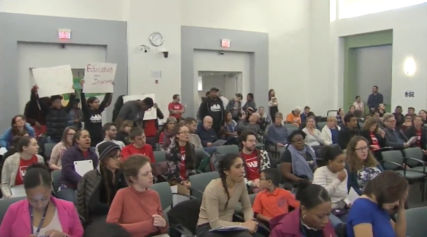
A Philadelphia man walked out of prison this week after serving more than two decades in prison for a crime he did not commit.
Theophalis Wilson, 48, was freed on Tuesday after he spent 28 years in prison for a 1989 triple murder, according to The Associated Press. He is the twelfth person to be freed by District Attorney Larry Krasner’s Conviction Integrity Unit (CIU).
“Theophalis Wilson, you are free to go,” Judge Tracy Brandeis-Roman told him. He’d waited to hear those words since was accused of murder as a teenage boy.
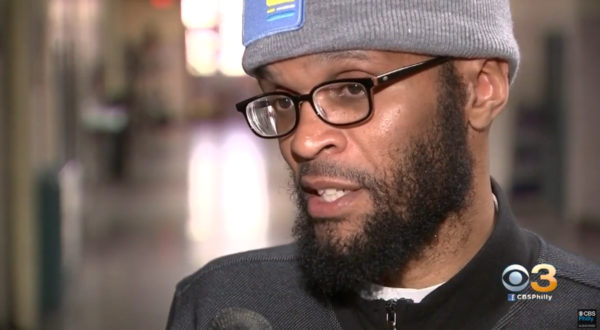
“This is a great day,” Wilson told The Philadelphia Inquirer. “Now we’ve got to go back and get the other guys. There’s a lot of innocent people in jail.”
Patricia Cummings, chief of the CIU, expressed remorse for what the office called a “perfect storm” of injustice.
“We believe there are indeed Brady violations,” Cummings said, referring to Brady v. Maryland, a 1963 Supreme Court ruling which requires prosecutors to disclose material exculpatory evidence to the defense. “We find that to be incredibly troubling.”
David Desiderio, a former member of the prosecution, denied accusations of corruption and questioned Krasner’s motivation for revisiting the case.
“It’s garbage. It was something the district attorney made up,” he said. “That man never once indicated to me that what he was saying was false. If the DA wants to believe that, then there’s something else going on with the District Attorney’s Office. A jury believed this man. I don’t know how they can invade the province of the jury.”
The Inquirer reports Cummings became emotional during court proceedings.
“It is time for Mr. Wilson to be allowed to go home — that he go home a free man, and that he go home with an apology,” Cummings said. “No words can express what we put these people through. What we put Mr. Wilson through. What we put his family through.”
Wilson’s plight started thirty years ago, after the September 1989 slayings of Kevin Anderson, Otis Reynolds and Gavin Anderson, who prosecutors say were robbed of more than $26,000, executed and thrown from a moving van in North Philadelphia. By 1993 Wilson and Christopher Williams, who remains in prison for another murder, were charged and convicted for the slayings. Williams received three death sentences and Wilson was sentenced to life in prison without a chance of parole. Their fates were decided based on testimony from James White, a man who confessed to six murders.
During a 2013 hearing for Williams, White admitted he lied because the prosecution agreed to take the death penalty off the table and secure a 15-year sentence. He claimed he was coerced into testifying and fed false information.
Williams’ sentence was eventually thrown out, but he’s still in prison for the murder of Michael Haynesworth. That conviction also depended on testimony from White.
The spotlight on Williams’ case drew attention to Wilson’s plight.
“If Chris had not gotten the death penalty, I don’t think anybody would know about these cases,” said Jennifer Merrigan, one of Wilson’s lawyers. “It was only because he had really great lawyers who thoroughly litigated the case and had the money to involve experts … and then to continue that fight.”