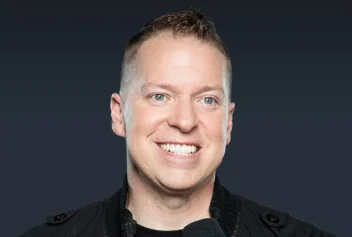
A white University of North Texas attorney resigned the day after students held her to task for saying n—-r during a panel discussion on hate speech but censoring herself when referring to the f-word.
Caitlin Sewell started the controversial “When Hate Comes to Campus” panel by saying a lot of people say offensive things in the lecture because “it’s impossible to talk about (the) First Amendment without saying horrible things.”
“‘You’re just a dumb n—-r and I hate you,'” Sewell said. “That alone, that’s protected speech.”
The attorney then censored herself four times when referencing a hypothetical situation in which someone walked into the dean of students’ office screaming obscenities.
“‘F this place. F all of you. You know. Y’all are all f-ing stupid,'” she said in the example.
She used the acronym again to explain that an offender might think the First Amendment protects the speech.
“‘No I can tell them all to f off anytime I want,'” Sewell said.
At that point, chuckles and whispers could be heard in a recording of the speech student JC Patino shared Thursday on Twitter.
Sewell went on to further explain which language was protected by the First Amendment until someone shouted a question:
“Excuse me, but why did you censor the f-word but not the n-word?”
Applause followed.
“I apologize. I didn’t think anything about that,” Sewell said.
The explanation appeared to do little to ease her audience’s concerns.
“No no, you know that that word is offensive,” another person could be heard saying in the recording.
Sewell apologized again and said she “didn’t mean anything by that.”
“You know that that word comes with a history of hurt,” someone shouted at the woman. “It was unnecessary. It was cruel.
“It was unnecessary, and it was cruel, and you know that.”
Sewell continued explaining.
“I wish I had censored that word. It came out without thought,” she said.
The attorney started to apologize again, but the crowd interrupted her with protests and questions.
“How often do you say it for it to just roll of your tongue,” one woman asked, earning her praise from the crowd.
“I literally have never said that word in a public setting before,” Sewell said.
The recording ended, but the discussion didn’t.
Yolian Ogbu, the university’s Student Government Association president, was shown holding back tears in a photo Patino tweeted.
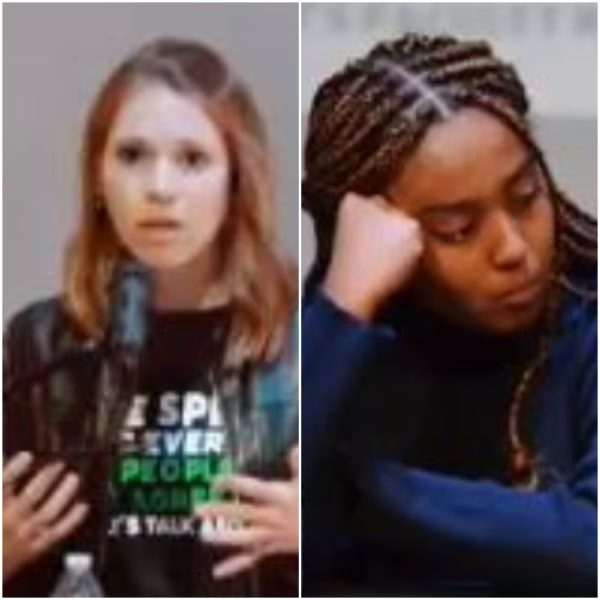
When she spoke in another recording Patino tweeted, her voice cracked.
“I’ve kind of been shaking for awhile,” she said. “So it’s really tough because…”
The university’s President Neal Smatresk and the system Chancellor Lesa Roe announced Sewell had resigned Nov. 8 in a joint statement released later that day on the university website.
In the statement, the school leaders said they “approach the situation with regret and determination.”
“We strongly believe in a culture that embraces, and vehemently defends, inclusion,” Smatresk and Roe said. “While Ms. Sewell was trying to make a point about First Amendment speech, the references used are never condoned in our community, which prides itself on our diversity and caring nature.”
The university leaders also mentioned plans to engage students and campus leaders in discussion “regarding ways we can continue to foster a culture of diversity.”
“In the meantime, UNT counseling resources are available for all students, faculty, and staff,” Smatresk and Roe said.