Two of California’s largest counties are welcoming Black women to their lists of superior court judges.
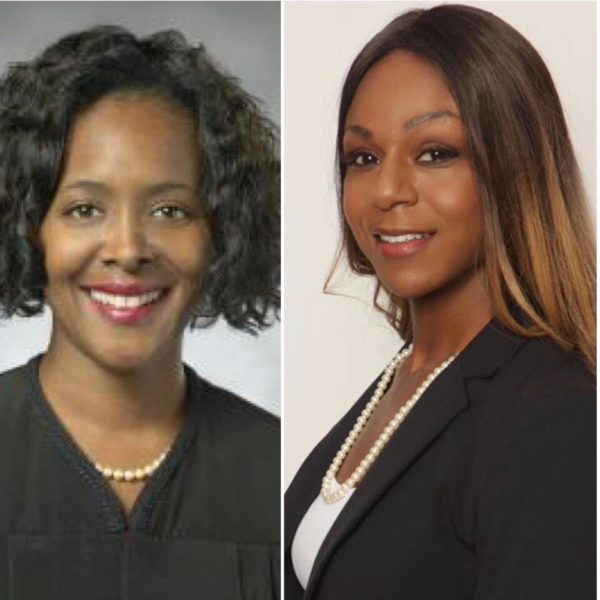
Tricia Taylor and Terrie Roberts were appointed with nine other justices in the Golden State, California Gov. Gavin Newsom announced Oct. 25.
Eight of the officials appointed are women, and all of them are Democrats filling vacancies left by retired justices, the governor’s office said.
Dezie Woods-Jones, state president of Black Women Organized for Political Action, told the Daily Sentinal Roberts and Taylor’s appointments are “significant” and “speak volumes.”
“I am extremely pleased and excited that there are two new highly professional and qualified African American Women judges appointed to the California Superior Court,” Woods-Jones said.
Taylor, 39, of Los Angeles, was appointed in Los Angeles County Superior Court. Prior to her appointment, served for 12 years as a deputy district attorney at the county district attorney’s office.
Before that, she was a law clerk in the law offices of Marvyn B. Gordon and at the Children’s Law Center, the governor’s office said.
Roberts, 54, of Chula Vista, was appointed in the San Diego County Superior Court, according to the governor’s office.
She has served as a commissioner at the San Diego County Superior Court since 2008, and she also was formerly a deputy district attorney for seven years following her time as a sole practitioner from 1996 to 2001.
Roberts also has law associate and deputy public defender in her batch of former titles.
Alameda County Judge Brenda Harbin-Forte wrote earlier this year in the Daily Journal that there were few Black women serving as judges in California.
Harbin-Forte, who is a Black woman, writes about the history of Black women in the state’s judiciary. She said in examining trial courts, she determined that fewer than half of California’s 58 counties had ever had a Black female judge.
“Thus in 39 counties, no African American woman’s experiences have brought life to the law,” Harbin-Forte said in the Daily Journal.