The series premiere of the HBO series “Watchmen” debuted Sunday night and while the show is inspired by some fictional characters in the DC Comics series of the same name, the plot of the first episode was all too real.
Set in an alternative history where superheroes are seen as outlaws, the initial episode sees Detective Angela Abar and Chief Judd Crawford look into the attempted murder of a Tulsa police officer in 2019 — where law enforcement now shields their faces with masks. The probe comes nearly 100 years after a Black boy and an orphaned baby girl are the lone survivors after planes drop bombs on the community in the 1921 Tulsa Race Massacre.
The 20th-century incident saw the Ku Klux Klan invade the area of Black wealth known as Black Wall Street on May 31, 1921, and kill at least 300 people — 90 percent of whom were Black. Over the course of 16 hours, the community was left in shambles, burned to the ground after white mobs destroyed 35 city blocks where 1,200 people lived. Moreover, 600 thriving businesses were lost, and among them were 30 grocery stores, 21 restaurants, two movie theaters, and a hospital.
The moment has been deemed the “single worst incident of racial violence in American history, “ according to the Oklahoma Historical Society.
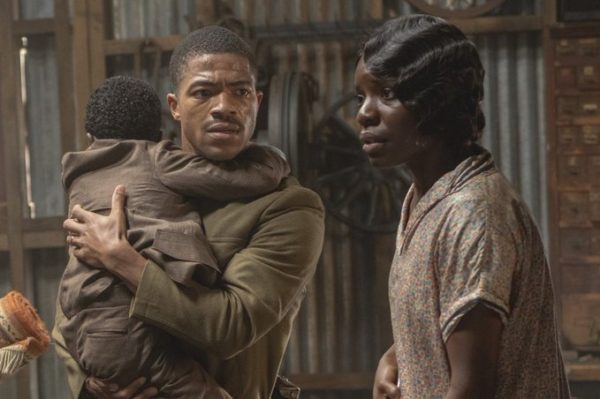
But many white viewers of the Regina King-starring “Watchmen” had been unaware of the massacre, of which news reports on the matter were largely suppressed, according to History.com. Many of those watching the show admitted their ignorance of the event that ravaged a once-wealthy area in which six Black families owned their own planes when only two airports were built. It never returned to its former brilliance after desegregation.
“Unfortunately, it wasn’t until I was an adult that I learned about Black Wall Street and the Tulsa Race Riots.”
“I’m an American in my late 30s and had never heard of ‘Black Wall Street’ or the Tulsa Race Riots until tonight. I only learned of them after researching a scene in #Watchmen that I initially assumed was a fictional event because of the aircraft. Wow. :(“
“I’m embarrassed to admit I had never even heard of the Tulsa Race Riots of 1921 before tonight’s episode of Watchmen on HBO. Even then I thought it was part of the show’s hyper violent alternative history….”
Others who had already been familiar with the historic act of violence were pleased to see that the incident was garnering more attention.
“When American History can’t stay hidden forever! #IF–KINLOVEIT”
“With one fell swoop, people are now googling Bass Reeves and the Tulsa/Black Wall Street riots and finding out that…yes…these are based on real events.”
“I’m glad people are now learning, but I’m endlessly disappointed that Americans always wait for a movie to teach them history. It’s frustrating.”