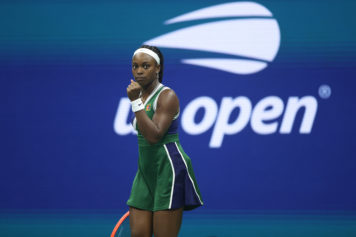
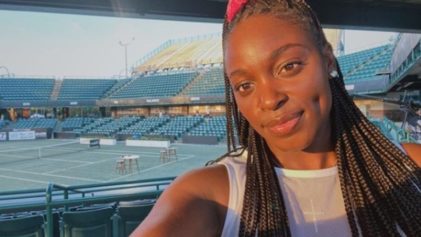
Sloane Stephens wants to dispel the common belief that tennis is just for the affluent and only people with money can afford to play it.
To do that, she’s partnered with Mercedes-Benz and will work with young girls in the different New York chapters of National Junior Tennis & Learning.
Stephens — who was upset by 20-year-old Anna Kalinskaya in the U.S. Open on Tuesday — recently spoke with theGrio about the partnership and explained why it’s important that she erase the idea that tennis and having money go hand in hand.
“Of course, who that notion affects the most are African-Americans, Hispanics, etc.,” she explained. “That’s just how it is and how it’s always been seen. So I think being able to show people that it’s not just a rich sport and that anyone can play as long as the opportunity, the passion, the drive and hunger are there, there’s space for everyone to be a part.”
As of now, the 26-year-old has one Grand Slam title under her belt, which came with a 2017 U.S. Open victory. Stephens became just the fourth Black woman to win a Grand Slam singles title after Althea Gibson, Venus Williams and Serena Williams.
Stephens talked about the challenges of being a Black woman in pro tennis and the importance of staying unified with the other Black female players.
“There were of course those before me, but tennis has always been very handpicked when it comes to black women,” she explained. “Either you make it or you don’t and obviously, with there being Venus and Serena, and Madison Keys, there’s so very few of us, so we make sure we stick together.”
“It’s hard, but learning and growing through the sport and learning about myself and realizing that some things just aren’t fair has made me more comfortable with what comes with the territory,” she added.
Monique Harrison, who’s head of brand experience marketing for Mercedes-Benz, said Stephens was the perfect athlete to be an ambassador for the luxury car company.
“We were certainly looking for someone who would pay it forward, and was as innovative as our brand,” stated Harrison. “She became an easy one for us to have a conversation with because she matched a lot of our brand standards, ours matched hers, and when started thinking of our mantra, ‘the best or nothing’ it made perfect sense.”