A California school district is investigating a cruelly racist bulletin seemingly from a Sacramento-area school’s website calling for a sweeping “no black people” policy.
At first glance, the message looks like an official post from Rio Americano High School and even has the principal’s signature. However, officials with the San Juan Unified School District confirmed that the memo, circulated among students via social media, was doctored and never appeared on the school’s web page.

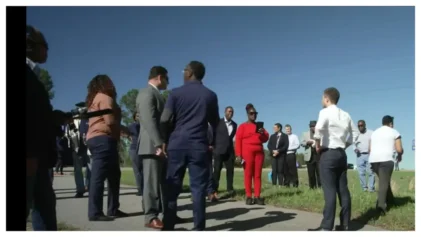
San Juan Unified School district officials learned of the offending post Thursday, calling it “incredibly hurtful.” (CBS Sacramento / video screenshot)
“After our initial review, we have found no evidence that a website with this message ever existed on the Rio Americano High School website, and all indications show that the image is fake,” district spokesman Trent Allen told the Sacramento Bee in a statement.
District officials said they first learned of the offending image Thursday, calling it “incredibly hurtful” and not representative of the school and surrounding community.
The post, riddled with incendiary language, announces a district-wide ban on African-Americans and even advocates for violence against them, CBS Sacramento reported. It also claims the Ku Klux Klan would be patrolling the hallways.
Senior Jalen Taylor said the message is no laughing matter.
“It’s something that should be taken seriously,” Taylor told the outlet, adding, “It’s already hard enough going to a majority white school, and having to deal with some stuff like this. It’s unacceptable.”
According to U.S. News and World Report’s “Best Schools”, white students account for 67 percent of Rio Americano’s student population. Meanwhile, 15 percent of students identify as Latino and a mere 4 percent as Black.
School officials said the Sacramento Sheriff’s Department and FBI have gotten involved and are working to determine who altered the racist message to appear as if it had come from the school. Officials admit it could be tough, considering that the memo it was never published online — only shared via text and social media.
Despite all this, students have vowed to stand together against the racist hatred spewed in the memo.
“Already, the student body is coming together add messages of inclusion and acceptance to a planned rally,” said Allen.
Anyone with information about the photo is encouraged to contact the school district via its Tell Someone form at www.sanjuan.edu/tellsomeone. Tips can be made anonymously.