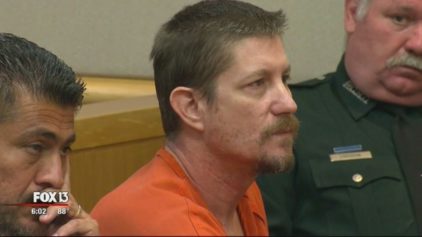
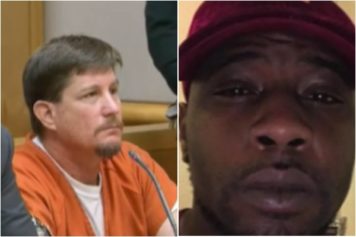
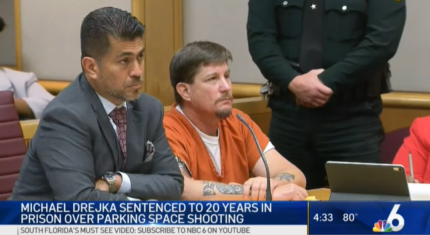
Jury selection has begun in the trial of a white Florida man who shot and killed an unarmed African-American man during a heated dispute over a handicap-accessible parking space, NPR reported.
Michael Drejka, 47, was charged with manslaughter after gunning down Markeis McGlockton outside a Circle K convenience store in Clearwater last year, a fatal encounter captured on surveillance video. Drejka wasn’t arrested immediately after the incident, however, after authorities invoked Florida’s controversial “Stand Your Ground“ law.
The dispute between Drejka and McGlockton unfolded July 19, 2018, after McGlockton’s girlfriend, Brittany Jacobs, pulled into a handicapped parking spot without the proper permit. Upset, Drejka confronted the young woman and scolded her for not parking in any of the other available spots. The two proceeded to exchange words, surveillance video shows.
McGlockton and the couple’s 5-year-old son were still in the convenience store at the time.
McGlockton, 28, eventually exits the store to find Drejka arguing with his girlfriend. That’s when he approaches Drejka, shoving the irate man to the ground. Seconds later, Drejka draws his weapon, while still on the ground, and fires at McGlockton, striking him in the chest.
The young man was later pronounced dead at the hospital.
Drejka, 47, told deputies that he feared for his life and shot in self-defense. However, Pinellas County State Attorney Bernie McCabe believes his office can prove otherwise.
“In any case where a defendant raises self-defense as an affirmative defense, we have to disprove that defense beyond a reasonable doubt, and I made the determination that we can do that,” McCabe told USA TODAY in a recent interview.
At the time, Pinnellas County authorities said the shooting fell “within the bookends” of the state’s “stand your ground” self-defense law, which doesn’t require a person to retreat, but instead allows them to use lethal force if they feel their life is in danger. The statute faced national scrutiny after the 2012 shooting of Black teen Trayvon Martin, 17, by neighborhood watchman George Zimmerman.
Pinellas County Sheriff Bob Gualtieri said Drejka told authorities that he feared he would be “reattacked” by McGlockton after being knocked to the ground, and “that he felt he was in peril and he needed to shoot to defend himself.”
Nearly a month would pass before the Florida man, who had a concealed carry permit, was finally charged with manslaughter.
Drejka’s trial is expected to last two or three weeks. His attorneys told local station WFLA they won’t be using the “Stand Your Ground” defense, but will instead argue self-defense, just as Zimmerman did in his murder trial for Martin’s killing. They’re expected to call a self-defense expert witness to testify, according to the outlet.
If convicted, Drejka faces up to 30 years in prison.
Watch more in the video below.