Yes, robot racism is a thing.
A new study out of New Zealand’s University of Canterbury found that humans tend to extend their racial biases to black and white robots, CNN reported. The “Robots and Racism” study, conducted by the Human Interface Technology Laboratory, suggests that humans assign a race to human-like robots, then project their biases/stereotypes accordingly.
Researchers fear this could pose serious issues, especially as the use of AI and automation/robots increases in day-to-day life.
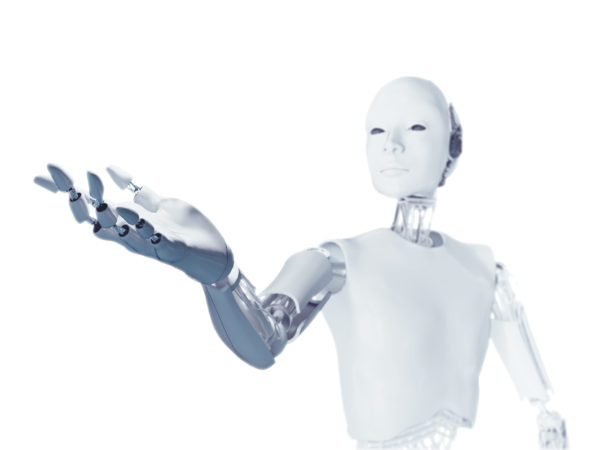
Researches found that humans ascribe a racial background to human-like robots, and apply racial stereotypes accordingly. (Photo: Science Photo Library/Getty Images)
“If robots are supposed to function as teachers, friends, or even carers, for instance, then it will be a serious problem if all of these roles are only ever occupied by robots that are racialized as White,” researchers wrote .
For the study, researchers used robots with human-like limbs and a head, with complexions that were either white/pinkish or deep brown. The team asked participants to engage in a “shooter test,” in which they were told to “shoot” at images of Black and white people and robots that flashed across the screen holding a weapon.
The subjects shot the Black, unarmed robots more than the white, unarmed ones, researchers found.
“It is amazing to see how people who had no prior interaction with robots show racial bias towards them,” Christoph Bartneck, the lead researcher, told CNN, adding that the bias against Black robots is reflective of the bias against African-Americans.
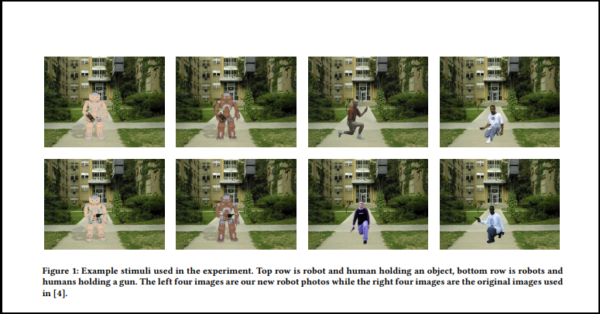
For one part of the study, participants were asked to “shoot” black and white people and robots who appeared on the screen with a weapon. (Robots and Racism study / screenshot)
“Robots are not just machines, but they represent humans,” he added.
In a second test, the researchers added lighter brown robots to the mix and found that participants’ racial bias had significantly been reduced once the robots were diversified. For study authors, this could “potentially mean that diversification of robots might lead to a reduction in the racial bias towards them.”
Bartneck told CNN the finding leads him to believe that “we have everything to win” by offering diversified options.
“In the same way that we do want Barbie dolls in all colors and shapes, we also want robots in more than just white,” he added.