The FBI is stepping in to investigate the recent deaths of three American tourists at the same resort in the Dominican Republic, the U.S. Embassy announced Wednesday.
According to NBC News, authorities in the Caribbean nation have asked for help in investigating the mysterious deaths of Miranda Schaup-Werner, 41 of Pennsylvania, and couple Nathaniel Edward Holmes and Cynthia Ann Day of Maryland. All three died over a five-day span while vacationing at the Bahia Principe resort in La Romana last month.
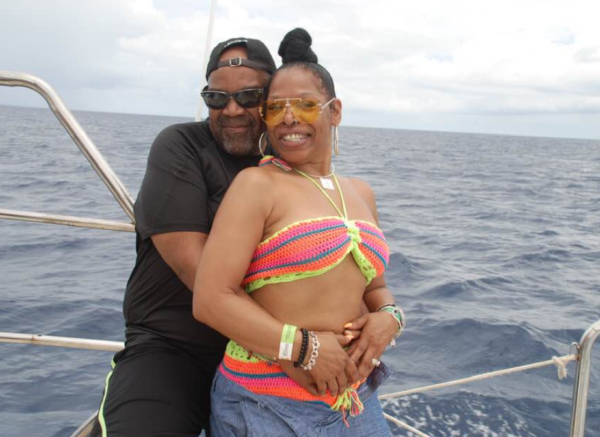
Engaged coupled Nathaniel Holmes and Cynthia Day had been vacationing in the Dominican Republic since May 25 and were supposed to fly back home last Thursday. (Image courtesy of Facebook / Nathaniel Holmes)
“We ask everyone to be patient while these investigations run their course,” a statement from the embassy read, adding that toxicology reports on the three tourists could take up to a month.
Schaup-Werner died May 25 after falling ill at the Bahia Principe Bouganville in San Pedro de Macoris. A spokesman for Schaup-Werner’s family said the 41-year-old “died suddenly and inexplicably in her hotel room” after having a drink from the minibar.
Her husband, Daniel Werner, was present when she began experiencing physical distress and collapsed. The couple was on the island celebrating their ninth wedding anniversary.
An autopsy concluded Schuap passed away of a “heart attack” after suffering respiratory failure and pulmonary edema, which is a buildup of fluid in the lungs.
Engaged Maryland couple Edward Nathaniel Holmes, 63, and Cynthia Day, 49, checked into the nearby Grand Bahia Principe La Romana resort that same day and suffered a similar fate just five days later. On May 30, the lovebirds were found dead in their hotel room. According to an autopsy report, the two had suffered respiratory failure and pulmonary edema.
Authorities said they found several bottles of high blood pressure medication in the room, but no signs of violence.
The mysterious deaths have become a major source of concern for Americans planning to travel to the island paradise. T his week, the death count rose after the U.S. State Department confirmed that a fourth American tourist had died while vacationing at one of the country’s luxurious, all-inclusive resorts.
Relatives of Robert Bell Wallace said the 67-year-old California man died April 14, just over a month before three U.S. tourists died while visiting the island nation. Wallace’s niece, Chloe Arnold, told Fox News that her uncle was sickened after drinking a scotch from the mini bar in his room at the Hard Rock Hotel & Casino in Punta Cana.
The Bay Area man, who was in town celebrating his stepson’s wedding, was seen by a hotel doctor, who decided he should be hospitalized. Arnold said her uncle felt very ill and had “blood and urine in his stool.” He would die just three days later.
“We have so many questions,” Arnold told the outlet, adding that Wallace was in good physical health and had just gone skiing at Lake Tahoe the month before. “We don’t want this to happen to anyone else.”
Travelers can add “falling violently ill” to the growing list of reasons not to visit the island after a popular website tracking food-borne illness outbreaks saw a spike in reports from tourists who say they were sickened while vacationing in the island paradise.
Since March, nearly 70 travelers have reported falling sick during their visit to the country — a seven-fold increase from just 10 reported illness in 2018, according to iwaspoisoned.com. Vomiting, diarrhea and fever were among the symptoms suffered by 52 tourists in June alone.
The New York Post reported that most of the travelers, 45 to be exact, said they were guests of the Hard Rock Hotel & Casino in Punta Cana. Patrick Quade, founder of iwaspoisoned.com, told the outlet that, “People report food-borne illnesses but it’s possible that they experienced some other type of contamination.”
Quade, who said he consulted with scientific efforts about his findings, said he noticed something “unusual” occurring when six people reported falling ill on the island back in April.
“But in June, it exploded,” he said.
The cause for the spike in illnesses remains unknown, but Lee-Ann Jaykus, a food microbiologist at North Carolina State University with whom Quade consulted, said exposure to an insecticide chemical called an organophosphate can result in some of the reported symptoms, including vomiting. In serious cases, the chemical can cause a cardiac crisis or even death.
“It’s quite possible that [Quade] has picked up something significant” that’s not food-related, Jaykus told the newspaper.
Last year, two other American tourists — Yvette Monique Sport, 51, of Pennsylvania and David Harrison, 45 of Maryland — also died under mysterious circumstances. Sport, who was staying at the Bahia Principe resort in Punta Cana, died after enjoying a drink from the minibar, while Harrison, a guest at the Hard Rock Hotel & Casino, did not recover after his wife says he fell sick and was unable to breathe.
Both travelers reportedly died of heart attacks, according to WTTG-TV.
The State Department issued a statement earlier this month, saying it was “actively monitoring” the D.R.’s investigations into the “tragic” deaths, but said so far, it has found no evidence that the incidents are connected.