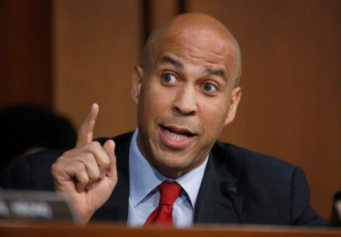
Sen. Cory Booker‘s message of love and empathy fell flat with critics this week.
Booker, who recently announced his bid for the 2020 presidency, addressed the crowd at a campaign event in Marshalltown, Iowa, on Saturday, where he called for better, more honest discussions on racism, sexism and other discrimination impacting the nation.
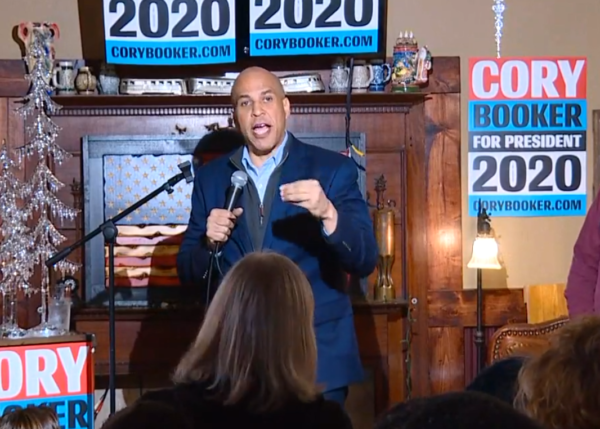
Sen. Cory Booker said some of his white friends have come up to him and said, ““I don’t understand this blackface thing, can you explain it to me?” (ABC News / video screenshot)
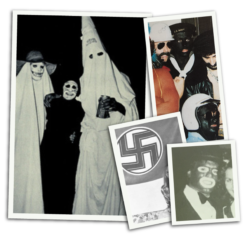
When asked how the country could make progress on bridging the racial divide, the New Jersey Democrat argued that “truth-telling” is key and noted that people often fear talking about things they don’t understand. He later referenced the hubbub surrounding Virginia Gov. Ralph Northam, who’s facing pressure to resign over a racist blackface photo that emerged two weeks ago. Booker said he’s since had a few white friends confess to him, “I don’t understand this blackface thing, can you explain it to me?”
“Imagine, in this climate now, saying that publicly,” he said. “If you want to have more courageous empathy, put yourself in a white person’s position who might have questions.”
“We have to be able to talk about race in America … We have to have a better conversation than we’re having right now,” Booker added. “If you want to have reconciliation, you can’t have reconciliation without truth-telling. And there are a lot of folks who don’t want to tell the truth about the persistent problems of race of inequity in this country. We gotta tell the truth, but we, all of us — black, white, gay, straight — we have got to start extending grace to one another so we can have honest conversations and leave room for growth.”
The senator’s comments didn’t go over well with critics who felt he, as one person put it, encouraged the “coddling” of those with privilege, HuffPost pointed out. Other folks argued there was absolutely no excuse for white Americans not to know the harmful, racist history behind blackface by now.
Cory Booker is literally in a room full of White people and said “put yourself in a white persons shoes”. Sir. https://t.co/KO10HOrk4p
— zellie (@zellieimani) February 10, 2019
Cory Booker said he had conversations with some of his white friends who said, "I don't understand this Blackface thing."
Cory Booker is 49. If his old ass white friends don't understand Blackface at damn near 50-years-old, why are they his friends? 🤔 https://t.co/yFijJbu6Z5
— Britni Danielle (@BritniDWrites) February 10, 2019
“Leave it to Cory Booker to play the role of Political Barney and utter ‘put yourself in a white person’s position’ on the issue of blackface” author Michael Arcenauex tweeted.
Filmmaker Tariq Nasheed put it plainly: “Oh no Cory … this ain’t it playa.”
The presidential hopeful went on to address discrimination against the LGBTQ community and seemed to compare people being scared to ask about blackface to himself once being reluctant to ask an LGBTQ person about the struggle of coming out.
“It’s #Blackface @CoryBooker!” one critic tweeted. “What the hell does being n a white person’s shoes 2 understand y it’s wrong, 2 then speaking about an #LGBT person coming out have 2 do w/that? U are trying to hard w/this assimilation politics. Stick w/the issue at hand.”
“The use of working on LGBTQ crisis hotline & while talking about understanding white people looking for answers about blackface. … I’m willing to admit I’m missing something here because I don’t consider someone coming out as gay the same as coming out as racist,” another chimed in. “I don’t see it.”
Watch more in the clip below. Discussion starts around the 48:00 minute mark.
https://www.facebook.com/ABCNews/videos/2284715208229022/