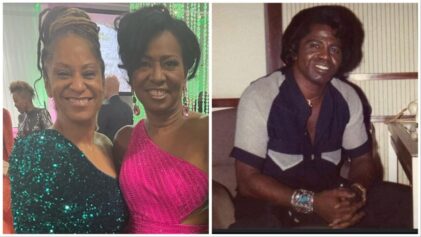
CNN has conducted a three-part series to investigate the question of whether James Brown was murdered.
The singer passed away at age 73 on Dec. 25, 2006, and the official cause was listed as a heart attack, as well as fluid being in his lungs.
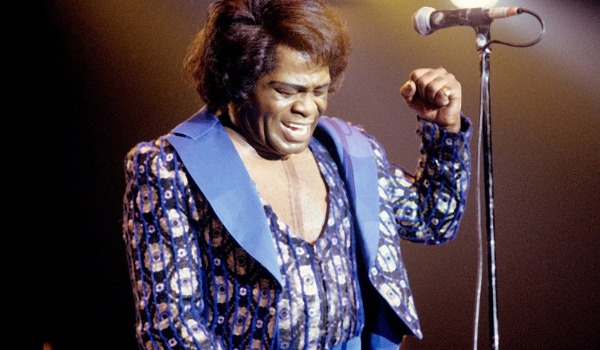
Wikimedia Commons
But after speaking to about 140 people, CNN found at least 13 who believe Brown was killed, and they want an investigation launched. Plus, they would like his body exhumed for an autopsy since one was never performed.
One of the folks who really believe Brown didn’t die from natural causes is Dr. Marvin Crawford, who signed the singer’s death certificate and believes his condition changed way too suddenly.
“He changed too fast,” Crawford said. “He was a patient I would never have predicted would have coded. But he died that night, and I did raise that question: What went wrong in that room?”
Crawford also said he suggested to the family that an autopsy be performed hours after Brown’s death, but the singer’s daughter Yamma Brown refused one.
So both of those things, the sudden change in Brown’s condition and no autopsy being performed, are just two of the reasons why some believe foul play was involved.
Plus, Andre Moses, the singer’s old friend and the person who helped him check into the hospital on the night he died, took a vial of Brown’s blood from an IV tube after he died. That’s because Moses was very suspicious of his sudden grave condition and hoped the blood could help police investigate the death.
The reporter who’s working on the series, Thomas Lake, said the entire theory that Brown was murdered was started by a woman named Jacquelyn Hollander, who wrote songs with him in the ’80s.
Hollander told Lake that she could prove Brown was murdered and that his late third wife Adrienne Brown, who was a good friend of hers, was also killed.
Hollander also accused the singer of raping her when they worked together and claimed Brown ran his business affairs like the “mob” with “control, fear, intimidation and lies.”
In part three of the series, Lake spoke to Al Sharpton, who was a close friend of the late singer and said he too had concerns about the circumstances of Brown’s death.
“I’ve always had and still have a lot of questions. I wouldn’t mind a further investigation at all,” Lake said Sharpton told him in 2018.
Plus, Hollander brought up Candice Hurst, Brown’s hairdresser, and said Hurst told her about a vision about Brown’s manager Charles Bobbit giving him something to drink that took his life. And Hollander believes that was an admission.
“[Charles] Bobbit poured some herbs into a glass of water,” Lake said Hollander explained to him. “He gave Brown the water, Brown drank the water and then he died,” Lake said Hollander explained to him.