The Somalian government has granted 31 new fishing licenses with the China Overseas Fisheries Association (COFA) in an effort to ensure the African nation’s resources are exploited legally.
Speaking at a ceremony announcing the deal, President Mohamed Abdullahi Farmajo lauded the licensing of more foreign trawlers as a great move for the African nation. The deal has drawn mixed reactions from Somali natives worried about the country’s already depleted fishing waters, however.
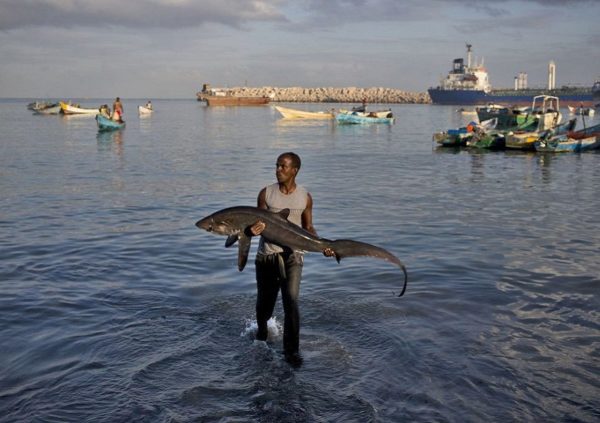
Research estimates that up to 2.4 million tons of fish have been caught by foreign vessels off the Somalian coast over the last 30 years. (Photo by Adesco)
According to BBC News, this is the first time Farmajo has granted fishing rights to foreigners.
“Today, we launched this process of granting a fishing license,” the president announced Dec. 11. “These licenses allow Tuna fishing, and this shows that Somalia issues licenses through the legal process.”
Face 2 Face Africa reports that the licenses come at a time when local Somali fisherman are struggling to compete with large foreign vessels that have fished the Horn of Africa nation’s territorial Indian Ocean waters illegally for years. Considered a failed state for decades, the government had essentially no ability to protect its fishing rights, leaving its local fishermen in small boats with little to catch after foreign factory vessels depleted Somali waters through their catches, destructive fishing practices like dynamiting and destroying coral habitats, and dropping toxic wastes from their ships.
This in turn led these fishermen, no longer able to ply their traditional means of earning a living, to turn to piracy, capturing large vessels and holding their crews and cargoes for ransom.
A 2009 article published in TIME magazine described Somalian waters as a “free-for-all” fishing site where international trawlers have illegally fished over $300 million worth of seafood.
With the recent licensing deal, China will now be able to fish for tuna in Somalian waters, allowing one vessel to run during the December to February season, according to BBC News. Many local fishermen fear the licenses will only exacerbate the overfishing, but fisheries minister Abdirahman Ahmed says that’s not the case.
“The licences we handed out were for tuna fishing, so it’s migratory,” Ahmed told BBC News. “The migratory species for each country has a quota. So once we issue licenses, we can see that quota. These fish are migratory … so I don’t think the license we’re issuing now has any affect on the overfishing.”
The fisheries minister explained there are several measures in place to ensure the Chinese vessels are properly regulated, including routine inspections by ministry staff.
“They’ll be on board these vessels,” he said.
As for the local fishermen, Ahmed said the new deal is designed to protect them. According to him, up to 24 nautical miles off the Somali coast are reserved for local fishermen and per the terms of the license agreement, his ministry can call the ships into the port at anytime for inspections.