A Christian evangelist died last week after attempting to convert an island tribe whose people have resisted the outside world for centuries.
John Allen Chau, 26, was shot and killed by arrows last week after he kayaked to a remote Indian island. He was on a quest to convert the Sentinelese tribe to Christianity, according to excerpts from his journal.
Indian law forbids contact with North Sentinel Island after the Andaman tribe has made it clear several times they have no interest in communicating with outsiders. Also, officials are interested in keeping the tribe safe from outside diseases, which the long-isolated natives of the island would have little immunity to. Chau, on the other hand, knew the risks of possibly being killed, but decided to pursue the mission anyway, according to authorities.
Survival International, an advocacy group on behalf of tribal peoples’ rights, condemned the irresponsibility of the American in exposing the islanders to possible disease, saying in a statement, “It’s not impossible that the Sentinelese have just been infected by deadly pathogens to which they have no immunity, with the potential to wipe out the entire tribe.”
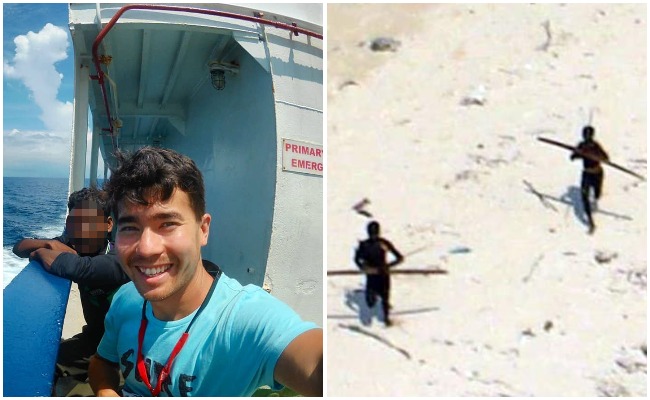
(photo credit; CBS News/ Left; John Chau and R; Andaman tribesman)
The American man wrote in his journal that the first day he’d arrived on the island, a tribesman shot at him with a bow and arrow and pierced the Bible he was carrying.
“I hollered, ‘My name is John, I love you and Jesus loves you,'” Chau wrote in his diary that was shared by his mother to the Washington Post. Moments later a young child also shot at the 26-year-old and that’s when he swam back to the fishing boat he’d arranged for offshore.
“Why did a little kid have to shoot me today?” Chau wrote in his notes. He added, “Lord, is this island Satan’s last stronghold where none have heard or even had the chance to hear your name?”
In the missionary’s diary, he indicated that he knew the trip was illegal and believed that God was helping him dodge the authorities.
“God sheltered me and camouflaged me against the coast guard and the navy,” Chau wrote.
The day after Chau was shot at, he swam back to the island, but it’s unclear what happened next. Fishermen said they saw tribesmen dragging Chau’s body along the beach to bury his body.
Five fishermen, a friend of Chau’s, and a local tourist guide who were said to have taken the 26-year-old to the isolated island have all been arrested by Indian authorities.
The Andaman tribe is thought to have lived in isolation for at least 10,000 years and possibly as long as 30,000 years. Anthropologists believe the tribesmen are the last people on earth whose way of life remains untainted by modern civilization.
Indian officials are working to retrieve Chau’s body from the island.
Chau’s last note he wrote before he was killed read, “You guys might think I’m crazy in all this but I think it’s worthwhile to declare Jesus to these people,” it said. “God, I don’t want to die.”