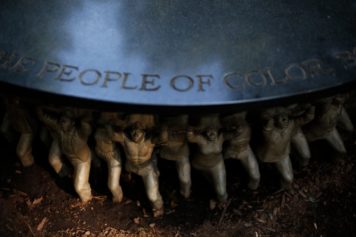
As the University of North Carolina celebrated its 225th birthday on Friday, Chancellor Carol Folt apologized for the university’s ties to slavery and injustice toward African-Americans.
“As chancellor of the University of North Carolina at Chapel Hill, I offer our university’s deepest apology for the profound injustices of slavery, our full acknowledgment of the strength of enslaved peoples in the face of their suffering, and our respect and indebtedness to them,” Folt told a roomful of students and leaders. “And I reaffirm our university’s commitment to facing squarely and working to right the wrongs of history so they are never again inflicted.”
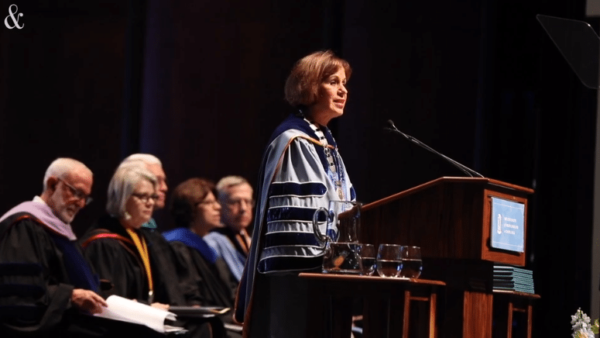
Carol Folt acknowledged that an apology wasn’t enough and advocated for the university to take “purposeful action.” (News & Observer video screenshot)
Enslaved Blacks helped build and sustain the now-225-year-old campus. The university, Folt said, must continue to reconcile its past with its present.
Folt is now the first chancellor in the nation to issue an apology specifically addressing a university’s role in slavery, CBS 17 reported. Other institutions, including the University of Mississippi, Clemson University, and Georgetown University, among others, have also taken steps in recent years to atone for their racist pasts.
In her speech Friday, Folt acknowledged that words or an apology might not be enough, however.
“Our apology must lead to purposeful action,” the chancellor said. “And it has to build upon the effort and the sacrifices of so many across the years who fought so hard for much of what we value at Carolina today.”
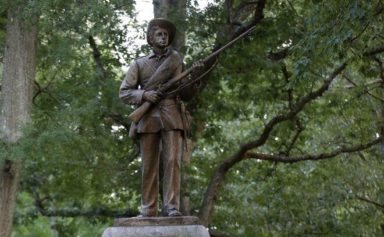
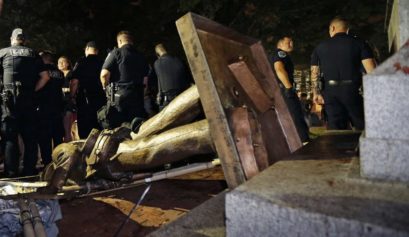
Her declaration came amid a heated debate about race on UNC’s campus sparked by the toppling of the Confederate monument known as “Silent Sam.” The longtime statue was pulled down by protesters Aug. 20 and has been source of controversy on the campus for decades, according to CBS 17.
The statue’s toppling soon lead to clashes between Confederate sympathizers and folks who opposed Silent Sam. Some of those protests turned violent and resulted in arrests.
With the monument in storage for now, the News & Observer reported that Folt and the UNC Board of Trustees have until Nov. 15 to decide Silent Sam’s fate. North Carolina law requires that it be re-re-erected with 90 days, but the chancellor says she hopes to find a new home for the controversial statue.
Folt’s apology also comes a month after the university announced plans to scrub William Rand Kenan Sr.’s name from a plaque at Kenan Memorial Stadium and replace it with his son’s name, William Rand Kenan Jr. The change was part of an effort by UNC to distance itself from Kenan Sr., who was involved in the Wilmington Race Riot of 1898.
In 2015, university trustees also voted to rename Saunders Hall, which had been named in honor of 19th century Ku Klux Klan leader William Saunders, according to the newspaper.
Not everyone is convinced by the university’s recent efforts to reconcile with its past, such as history professor James Leloudis’ ideas to add plaques contextualizing the campus’ history.
“Will any of Leloudis’ plaques acknowledge the anti-racist activists who have worked tirelessly these last 50 years to bring Silent Sam down and end white supremacy at UNC?” student Maya Little tweeted. “Will they acknowledge that UNC refused for 105 years to do anything besides protect Silent Sam?”
Fellow UNC student Ayanna Webster expressed similar skepticism with Folt’s apology, telling CBS 17 that more needed to be done.
“Minority students need to be supported on campus,” Webster said. “Minority staff needs to also be supported and there needs to be resources available to everyone.”
Watch more in the clip below.