Colson Whitehead’s Next Novel ‘The Nickel’ Examines Black Boys Beaten and Sexually Abused at Reform School

Colson Whitehead

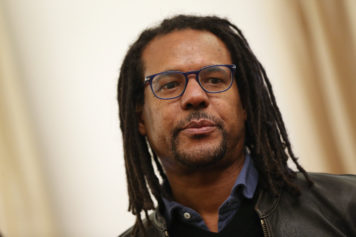
FILE – In this Oct. 20, 2017 file photo, Pulitzer Prize winning novelist Colson Whitehead speaks during the presentation of the Italian edition of his novel “The Underground Railroad” at the Argentina Theatre in Rome. (Maurizio Brambatti/ANSA via AP, File)

NEW YORK (AP) — Colson Whitehead’s next novel after “The Underground Railroad” is another look at the country’s tragic past and will be out July 2019.

Whitehead’s “The Nickel” is set in a brutal reform school in early 1960s Florida, Doubleday announced Wednesday. Scheduled for July 2019, the book is based on real events during the Jim Crow era, with students being beaten and sexually abused. The narrative centers on two students, one of whom believes in Martin Luther King Jr.’s message of nonviolent change and another who thinks the world hopelessly rigged.

“The Underground Railroad,” published in 2016, was a surreal story of an escaped slave that won the Pulitzer Prize and National Book Award and was selected by Oprah Winfrey for her book club. His other works include “The Intuitionist” and “John Henry Days.”

Democracy needs journalism it can trust.

This election season, the stakes are higher than usual — and so is the pressure on newsrooms to soften their coverage, stay quiet, or just disappear. Independent reporting, the kind that answers to readers instead of advertisers or political pressure, matters more in a moment like this, not less.

For over 14 years, Atlanta Black Star has stayed independent and reader-funded. We have no corporate owner and no shareholders telling us what to cover or how to cover it. That independence is also our biggest vulnerability: nothing protects it except readers choosing to fund it directly.

Newspaper ad revenue has fallen more than 80% since 2005, and local newsrooms are closing at a rate of roughly two a week nationwide. When outlets go under in a moment like this, it's rarely the independent, reader-funded ones that get to stick around.

We know a request for support isn't why you came here. But without readers choosing to fund this work directly, the depth of reporting we can do at home and abroad shrinks along with everyone else's. If you're not in a position to give, that doesn't change how much we value you as a reader.

If you are able to, a recurring contribution does more for us than a single one-time gift, because it lets us plan the next investigation instead of just the next invoice. It takes about 30 seconds, no long form, no account. Thank you for continuing to support independent journalism and freedom of the press.

Back to top