An online discussion about the role of race in deadly police shootings quickly turned into a debate over whether wealthy African-American men have it easier than poorer African-American men in regards to police violence.
The debate unfolded earlier this month amid news that Hollywood actor Ving Rhames was held at gunpoint outside his own home by police after his neighbors called to report a “big Black man” breaking in. Briahna Joy Gray, senior politics editor for The Intercept, pointed out that state-sanctioned violence is not only tied to race, but class as well.
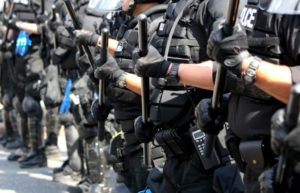
Twitter users debated over whether wealth and class protect African-Americans from racism and police violence. (Getty Images)
Citing a 2015 HuffPost article by the Rev. Jesse Jackson, Gray tweeted, “In the first five months of [2015], 95 percent of police killings occurred in neighborhoods w/ median fam incomes under $100k. There were no killings in neighborhoods w/ fam median incomes of $200k and above.”
“Frankly, it’s a pretty privileged take to pretend as though a wealthy Black celebrity suffers the same risks as a low-income Black man, even while it is also true that he suffers much more risk than a wealthy white celebrity,” she argued in a follow-up tweet.
Not everyone agreed with her position, however. One user pressed Gray to acknowledge the racial factors that led to income disparities among Black Americans, while others stressed the importance of Black banks in preserving wealth.
“When less than 10 percent of Black families have a collective income greater than 100k, pointing out the “class” aspect of this becomes extremely trivial,” another critic chimed in.
One user posed a thought-provoking scenario.
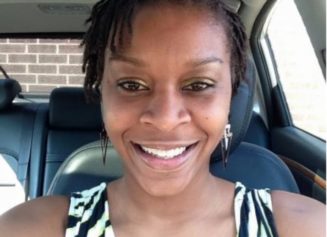
“What if, in the county where Sandra Bland was pulled over, all of the rich people were Black, so any Black [person] there might have friends or kin with $ and power? How would things have gone?”
Others noted that incidents involving LeBron James where the n-word was spray painted on his home, a neighbor calling the police on actor Ving Rhymes, and Sterling Brown’s arrest in Milwaukee disproves her argument.
One person likened the issue to a Venn diagram with poor people on one side and nonwhite people on the other.
“Police are biased towards one or the other,” he wrote. “But the middle is even worse, the sum of the two.”
According to The Washington Post’s police shootings database, a total of 722 people have been killed by police so far this year — 129 (18 percent) of them known to be African-Americans. The database does not provide statistics on the neighborhoods where the shootings took place.