FILE – In this file photo dated Friday, July 27, 2018, South African President Cyril Ramaphosa addresses a media conference at the end of the BRICS Summit in Johannesburg, South Africa. (AP Photo/Themba Hadebe, FILE)
That’s the message South African President Cyril Ramaphosa has for anyone fretting about the nation’s plans for land reform, which drew a critical tweet from President Donald Trump last month.
The government won’t allow “land grabs,” and land redistribution designed to address racial inequities will be orderly, Ramaphosa said Tuesday in remarks to Parliament.
He also said he doesn’t expect South Africa to be targeted by sanctions as it legally pursues land reform. Some South Africans have speculated that the United States might impose sanctions similar to those against neighboring Zimbabwe, where violent land seizures occurred years ago.
“Just relax,” Ramaphosa said. “This process will end up very well.”
Some groups in South Africa, however, worry about economic damage from plans for the expropriation of land without compensation.
The economy, one of Africa’s biggest, is already in recession and struggling with problems including a weak currency and fallout from state corruption under former President Jacob Zuma.
Ramaphosa has said the ruling African National Congress party will push for a constitutional amendment to clarify the land reform process, a move that some critics believe is unnecessary and designed to drum up voter support ahead of elections next year.
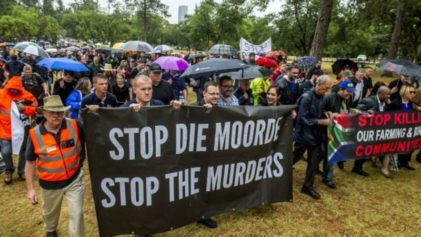
Last month, Trump claimed South Africa is seizing farms and that high numbers of farmers are being killed. In fact, the South African government has not authorized land seizures and says it is still deliberating on the best way to implement land reform.
There have been some invasions of privately owned land, but these have been stopped by police.
White South Africans, who comprise about 8 percent of the population, own more than 70 percent of the country’s private agricultural land even though white minority rule ended in 1994.
The problem is more than a century old: A 1913 law allowed South Africa’s black majority to own just a small portion of land, formalizing a race-based system of dispossession that had been in place for decades.
When people learn about the history, “everybody gets a shock and they wonder: ‘How could this have been allowed?'” said Ramaphosa, who took office after Zuma resigned early this year. The president acknowledged that “fears” remain about how land reform will unfold, though he said some concerns are dissipating.
People can’t “just wake up in the morning and go and do what they like and say, ‘This is my piece of estate. I’m taking over,'” Ramaphosa said. “That is not going to be allowed.”