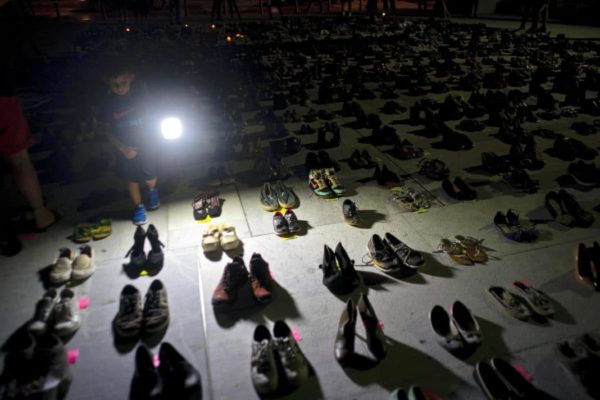
FILE – In this June 1, 2018 file photo, a child shines a light on hundreds of shoes at a memorial for those killed by Hurricane Maria, in front of the Puerto Rico Capitol in San Juan. (AP Photo/Ramon Espinosa, File)
SAN JUAN, Puerto Rico (AP) — Puerto Rico is now estimating that Hurricane Maria killed more than 1,400 people, far more than the official death toll of 64, in a report to Congress seeking billions to help the island recover from the devastating storm.
The government, relying on updated statistics it first reported in June, said there were 1,427 more deaths from September to December 2017 than the average for the same time period over the previous four years.
In a report to Congress detailing a $139 billion reconstruction plan, the territory’s government said that the additional deaths resulted from the effects of a storm that led to a “cascading failures” in infrastructure across the island of 3.3 million people.
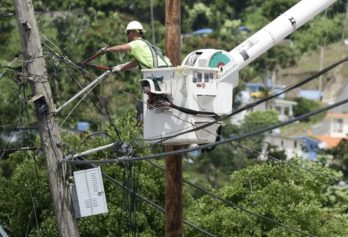
Hurricane Maria, as well as Hurricane Irma two weeks later, knocked out power and water to the island and caused widespread flooding that left many sick and elderly people unable to get medical treatment.
“The hurricanes’ devastating effects on people’s health and safety cannot be overstated,” the government said in the report seeking assistance from Congress to help rebuild an island that was already struggling from a deep economic crisis at the time of the storm.
In the weeks after the storm, Puerto Rican officials said the storm directly caused 64 deaths, many in landslides or flooding. But they have long publicly said that far more people died due to indirect effects of the powerful storm.
The more exact number has been a matter of debate and the government itself released the 1,427 count in June. But it said it would wait to update its official tally until receiving a report it commissioned from George Washington University. That report is due in coming weeks.
The use of the higher death toll in the report to Congress was first reported Thursday by The New York Times.
Most of the deaths occurred not in the initial storm on Sept. 20, but in the ensuing days and weeks when the island-wide electricity outage and roads blocked by downed power lines and other debris made it difficult to move around and emergency services were stretched beyond their capabilities.