Thanks to DNA testing, a group of Afro-Latinos was offered a peek into their African ancestry, revealing surprising results that showed they were more or less African than previously thought.
Using genetic testing company 23 and Me, the young men and women submitted a saliva sample and sent it off to the lab. Each spoke of the issues of colorism in their respective countries and how European ancestry is often viewed as better than Black ancestry.
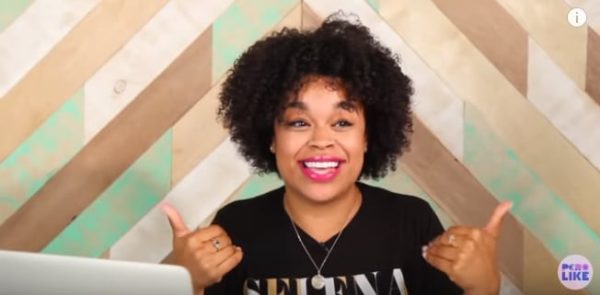
Julissa was surprised to learn she was less African than she originally thought. (Youtube video screenshot)
“In the Latino community, and especially in the Dominican community, racism is so alive. And colorism is so alive,” said Julissa, who’s Dominican. “…And the lighter you are or the straighter you hair is, then it’s like you’re better. And that’s ridiculous, that’s bullsh-t.”
Moriah, who’s from Mexico, recalled feeling like she didn’t belong growing up, saying her classmates would always dub her “the negrita.”
“It was just always a fight,” she said.
For Eli, it was his complexion and the history of Puerto Rick that got him curious about his ancestry and where he came from.
In a matter of weeks, the group got their results, which were shocking, to say the least.
“So I’m only African!” exclaimed Lovi, who is Honduran. Her results showed she was 64 percent sub-Saharan African, which made her grin with pride.
“This is so exciting,” she said. “I’m a proud Honduran — an Africana, afro-Latina … to be honest, I didn’t think it’d be so much from Africa. Yes, my family has said this before but when so much time has passed, your ancestors are one thing and were are separate people.
“So I didn’t think I still had all that DNA still in me,” she said.
Julissa got quite different results; she was 48 percent European and 39 percent Sub-Saharan African.
“What! I just wanted to be more Black,” she said jokingly. “That’s all I had wanted. I didn’t want to be a part of colonization!”
Watch more in the clip below.