A Minnesota congressman is under fire after unearthed audio files revealed he likened government welfare recipients to “parasites,” and suggested Black people who receive benefits are still on the “plantation.”
Rep. Jason Lewis’ comments, unearthed by CNN, came during a conservative radio show he hosted from 2009 to 2012, where he repeatedly demeaned folks on government assistance and even once lamented about not being able to call women “sluts.” The GOP congressman has faced backlash in the past for racist comments against Blacks, who he once accused of having an “entitlement mentality.”

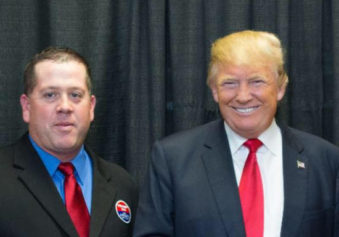
Rep. Jason Lewis once accused Black people of having an “entitlement mentality” and being “addicted” to welfare. (Image courtesy of CBS News)
“Blacks fought so hard … so that Blacks could take care of themselves and not be told what to do,” Lewis said during a 2012 broadcast of “The Jason Lewis Show.” “Now, you’ve got the modern welfare state that tells Black folks and Hispanic folks and poor white folks: ‘‘Don’t worry. We’ll take care of you.’ What is the difference? You’ve substituted one plantation for another.”
In another episode, Lewis argued Democrats won the White House in 2008 only because they had “parasite” welfare recipients backing them.
“I’m trying to explain to you how President Barack Obama could be in the lead in some of these polls,” he said in September 2012. ” …How’s this possible? It’s possible because the Democratic dream come true is this: The parasites outnumber the producers. Then, when the parasites outnumber the producers, the party of parasites will give the majority of votes.”
Lewis also once claimed that parts of the Civil Rights Act of 1964, which banned race-based discrimination in public spaces, were “unconstitutional,” the report revealed.
In a statement to CNN, a spokeswoman for Lewis tried to downplay the congressman’s problematic comments.
“CNN is free to focus on past rhetoric instead of Congressman Lewis’ record in Congress, and they will no doubt continue to ignore the substance of the arguments,” spokeswoman Becky Alery said. “But it does little to add to the debate.”
The damning report comes just a week after CNN reported on some of Lewis’ other past comments, including one where he expressed his belief that Black Americans felt entitled and that, in some ways, welfare has been worse for Black communities than Jim Crow.
“There’s a cultural problem in the African-American community that’s leading to this. The entitlement mentality,” Lewis said in December 2012. “You’re a victim. It’s OK to hate women, beat up women. It’s OK to hate gays. All this, we’re just sort of feeding this to people who are very lost because of the breakdown of society to begin with.”
The congressman, who was first elected to represent Minnesota’s 2nd District in 2016, is in the midst of a highly-competitive re-election campaign, according to HuffPost. The upcoming race has been described as a “toss-up.”
Despite the outrage, Lewis has yet to apologize for his remarks.