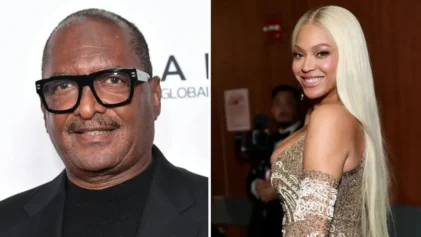
Zac Efron (photo via Instagram)
A debate over actor Zac Efron’s new hairstyle and cultural appropriation quickly turned into a history lesson about blonde hair in Black culture.
Efron, who’s white, debuted a photo of himself on Instagram wearing dreadlocks. Social media followers immediately flooded the star’s comments and blasted him for appropriating Black culture.
One person wrote, “Mate this is literally culture appropriation. Are you black? No. Delete this.”
Another added, “It’s called cultural appropriation! 🙄”
As fans jumped to Efron’s defense, one man dragged the “Run the World” singer Beyonce Knowles into the mix and said, “Nobody criticizes Beyonce for stealing long flowing blond hair from white culture. Another double standard.”
Social media followers schooled Twitter user Robin Bullock, who appeared to be an older white man, on the origin of Black people with blonde hair.
One person mentioned the derivation of blonde Afros from people in Melanesia, Australia. He wrote, “Blonde hair is natural amongst the people of the Solomon islands.”
Blonde hair is natural amongst the people of the Solomon islands for example…
— $XTER $MON Mr 🥞 $BUBBLE $IX 🐉 $MON $MOJO $TRIP (@ComSysError) July 6, 2018
So only white people have hair that is naturally straight and blonde? Please try Google and explore other cultures.
— Elle Jae (@ellejae24) July 6, 2018
Another person added that “blonde hair doesn’t belong to white people you know… there’s Black people with blonde hair.”
Inhabitants of Melanesia’s Solomon Islands east of Papua New Guinea were born with blonde hair and are of African descent. Eimear Kenny, PhD told the Daily Mail that “between 5 and 10 percent” of people across the islands “have this very dark skin and bright blond hair.”
Scientists said Melanesians have the ‘homegrown’ gene which gives them blonde hair and is completely different than the gene found in white people.
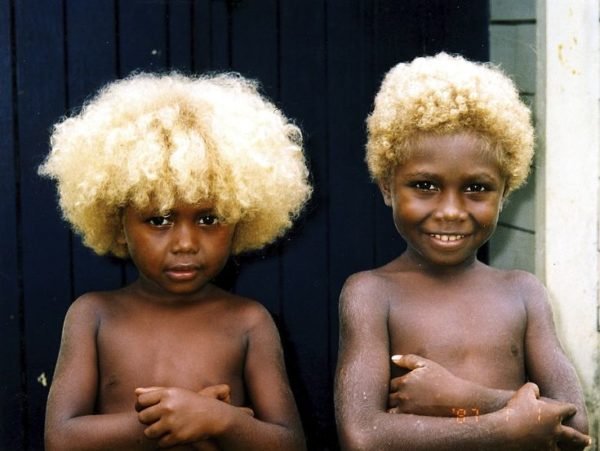
Kids from the Solomon Island (Credit: Pinterest)