Ethiopia
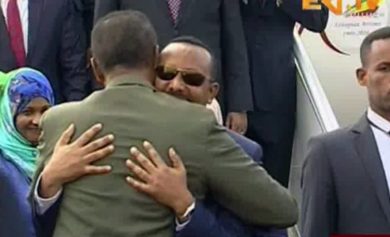
ADDIS ABABA, Ethiopia (AP) — Eritrea’s president announced Wednesday he is sending a rare delegation to neighboring Ethiopia for peace talks, days after Ethiopia’s new prime minister took a major step toward calming deadly tensions with its decades-long rival.
This is the first such delegation since 1998, when a border war erupted between the countries and they cut off diplomatic relations.
Eritrea’s longtime President Isaias Afwerki noted “positive signals” in recent days from Ethiopia and said the delegation will “gauge current developments directly and in depth” to plan future steps. He spoke during a Martyrs Day celebration in the capital, Asmara.
Ethiopia early this month made the surprise announcement that it will fully accept the terms of a peace agreement with Eritrea signed in 2000 to end the two-year border war that killed tens of thousands. The countries have skirmished a number of times since then. Ethiopia had refused to accept the deal’s handing to Eritrea of key locations, including the town of Badme, which it still holds.
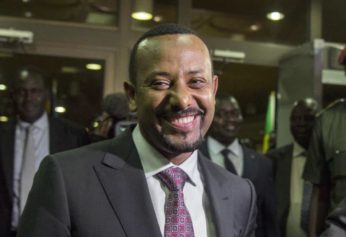
The decision to fully accept the peace deal was the biggest reform yet announced by Ethiopia’s young new Prime Minister Abiy Ahmed, who once fought in Badme. “The suffering on both sides is unspeakable because the peace process is deadlocked. This must change for the sake of our common good,” Abiy’s chief of staff, Fitsum Arega, said at the time.
Eritrea shortly after the announcement replied that it had always accepted the peace deal.
On Wednesday, Fitsum on Twitter said Abiy had “thanked and congratulated” Eritrea’s president for the positive response and “expressed his readiness to welcome warmly and with considerable goodwill” the Eritrean delegation.
Eritrea’s ambassador to Japan, Estifanos Afeworki, on Twitter said the delegation will pursue “constructive engagement.” Eritrea’s ambassador to Kenya, Byene Russom, called it a “new chapter of peace and reconciliation between the Eritrean and Ethiopian people.”
While Ethiopia is one of Africa’s fastest-growing economies, tiny Eritrea is one of the world’s most closed-off nations, ruled by Afwerki since gaining independence from Ethiopia in 1993 after years of rebel warfare. Eritrea has become a major source of migrants fleeing toward Europe, Israel and African nations in recent years as human rights groups criticize its harsh military conscription laws.
Ethiopia’s announcement on the peace deal set off a number of protests by residents in the northern Tigray region bordering Eritrea. The Tigrayan People’s Liberation Front, a party in Ethiopia’s ruling coalition that has been the dominant force in government for most of the past 27 years, said the announcement had been made before the ruling coalition’s congress met to discuss it: “We see this as a flaw.”