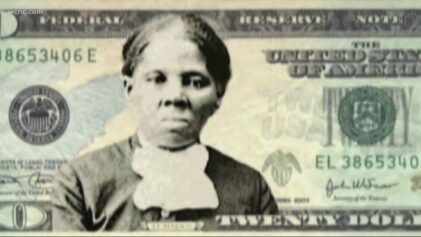
The Trump administration is dragging its feet on finalizing an Obama-era pledge to put abolitionist and civil rights legend Harriet Tubman on the $20 bill, according to a Senate Democrat.
On Tuesday, the Treasury Department released its letter to Congress praising Tubman for her heroics but stopped short of saying whether it would commit to making her the new face of the $20 bill, The New York Times reported. The letter was in response to a formal inquiry from Sen. Jeanne Shaheen (D-New Hampshire), who questioned the status of the change first announced by the Obama administration in April 2016.
“The redesign of the next currency series is still in the early stages, and neither the final designs nor all features have been finalized for the new notes,” Treasury Dept. assistant secretary Drew Maloney wrote in the letter to Shaheen.
“For this reason, the department is unable to provide additional information regarding the potential designs at this time,” he added.
In 2016, the Treasury announced that Tubman, who lead thousands of enslaved Blacks to freedom, would replace President Andrew Jackson on the newly designed bill, pushing the notorious slaveholder to the back of the note. The redesign was set to debut in 2020, just in time for the 100th anniversary of women’s suffrage and the addition of the 19th Amendment to the U.S. Constitution.
Shaheen called the Treasury’s response to her letter “severely” disappointing and criticized the Trump administration for failing to follow through with the promise of honoring the late civil rights icon.
“I’m severely disappointed by the Trump administration’s failure to prioritize the redesign of the $20 bill to honor Harriet Tubman, and other trailblazing women and civil rights leaders,” she told The New York Times. “I will continue to press the Treasury Department to expedite the redesign of the $20 bill and keep its promise to the American people.”
Treasury Secretary Steven Mnuchin has been vague about Tubman’s fate on the $20 bill and it’s unclear when the redesign will be made public and ready for circulation.
“We haven’t made any decisions on whether we will change the bill or won’t change the bill,” he told the Economic Club of Washington in January.